











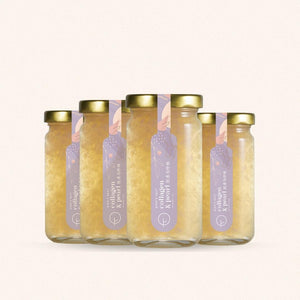







 Written by Shereen, Product Management Associate · Updated 19 November 2026
What is the best probiotic for bloating in Singapore?
Look for several named Lactobacillus and Bifidobacterium strains, the groups tested for bloating, plus a stated CFU count, added prebiotics and a format you'll take daily for at least 4 weeks. Daily Pre+Probiotic Melts has 7 named strains, 15 billion CFU and 2 prebiotics, formulated to support digestion and reduce bloating.
This article is for you if: you often feel bloated or gassy after meals, and want to know which probiotics research supports for bloating, what to check on the label and how long to give one.
Bloating is that tight, full feeling in your tummy, and the most common reason for it is a lot of gas in your gut, from some foods and fizzy drinks or from swallowing air as you eat.[1] Probiotics work on the bacteria in your gut, so they're a natural thing to try for this kind of bloating. Here's what the trials found, what to look for on the label, and where our Daily Pre+Probiotic Melts fits.
→ See Daily Pre+Probiotic Melts, our daily pre+probiotic for digestion and bloating
In this article
Is your bloating the kind a probiotic can help with?
Probiotic research looks at bloating that comes from digestion: the full, gassy feeling that builds after meals. The NHS lists gas, constipation, food intolerance and irritable bowel syndrome (IBS) among the common digestive causes, and notes that some people feel bloated around their period.[1]
- Puffiness rather than gas? Our guide to bloating vs fluid retention shows how to tell the two apart.
- Bloating that follows your cycle? See why period bloating happens and what eases it.
See a doctor if you feel bloated regularly, if changing your diet hasn't helped, or if bloating comes with unintentional weight loss or blood in your stool.[1]
Which probiotics have been studied for bloating?
Single Lactobacillus strains, and Lactobacillus and Bifidobacterium strains taken together, have eased bloating in placebo-controlled trials, with benefits seen within 4 weeks of daily use.[2] [3]
| Type | What it is | What studies found for bloating |
|---|---|---|
| Single strain | One named strain, such as a Lactobacillus plantarum strain | In a 4-week trial of 214 people with IBS, 1 capsule a day eased abdominal pain more than placebo, with similar results for bloating.[2] |
| Two-strain blend | A Lactobacillus and a Bifidobacterium strain taken together | In an 8-week trial of 60 people with non-constipation functional bowel disorders, bloating was lower than with placebo after 4 weeks.[3] |
| Multi-strain | Several strains in one product | A 2026 review of 12 trials, with 1,303 people with IBS, found multi-strain probiotics improved bloating scores compared with placebo.[4] |
Sources: randomised placebo-controlled trials and a meta-analysis of 12 trials.[2] [3] [4]
Daily Pre+Probiotic Melts is a multi-strain pre+probiotic, with 7 named strains, including Lactobacillus plantarum and Bifidobacterium lactis, and 2 prebiotics. GKM3, the Lactobacillus plantarum strain in our melts, has been tested in people: in a 4-week double-blind, placebo-controlled trial of 59 adults aged 20 to 40 with overweight (a BMI of 25.0 to 29.9), those taking GKM3 had more frequent bowel movements, and symptoms such as reflux, nausea, abdominal pain and constipation eased.[5]
What should you look for in a probiotic for bloating?
Check 4 things on the label: the strains, the live count, prebiotics and a format you'll keep up.
- Named Lactobacillus and Bifidobacterium strains. These are the groups tested in the trials above, and several strains together improved bloating scores in the 2026 review.[4] Daily Pre+Probiotic Melts has 7: Lactobacillus plantarum, Bifidobacterium lactis, L. brevis, L. fermentum, L. reuteri, L. rhamnosus and L. casei.
- A stated live count. CFU, or colony-forming units, is the number of live bacteria in a serving. Daily Pre+Probiotic Melts gives 15 billion CFU per sachet, counted at manufacture, with a patented 4-layer granule coating designed to help the strains survive stomach acid and reach your gut.
- Prebiotics. These fibres feed your gut bacteria, and our guide to prebiotics and probiotics explains how the two work together. Daily Pre+Probiotic Melts has 85 mg of polydextrose and fructo-oligosaccharides, plus 5 mg of bromelain, an enzyme from pineapple that helps break down protein.
- A daily format. The trials gave probiotics every day, so choose one that fits your routine. Daily Pre+Probiotic Melts is a cranberry melt you tip onto your tongue after a meal, with no water needed, and it's shelf-stable in a cool, dry place.
How long does a probiotic take to help with bloating?
Give a probiotic at least 4 weeks of daily use. In the trials above, bloating eased within 4 weeks,[2] [3] and for people with IBS, the NHS suggests trying probiotics for a month.[6]
With Daily Pre+Probiotic Melts, many customers notice improvements in bloating and digestion within 2 to 3 weeks, and we recommend taking it every day for at least 3 months for best results. Take 1 sachet a day after a meal; our product guide has how to take and store every product. It contains milk, and if you're pregnant, breastfeeding, taking medication or have a medical condition, check with your doctor first, as the label advises.
What else helps with everyday bloating?
Simple habits help alongside a probiotic. The NHS suggests:[1]
- eating smaller, more frequent meals instead of large ones
- chewing with your mouth closed, so you swallow less air
- drinking plenty of water and exercising regularly
- eating foods high in soluble fibre, such as oats or linseed, if you're constipated
- cutting back on fizzy drinks and on large meals late at night
At the hawker centre, that might mean plain water instead of a fizzy drink, a smaller plate shared with a friend, and a short walk after dinner.
Daily Pre+Probiotic Melts gives you 15 billion CFU of 7 named strains and 2 prebiotics in every cranberry melt, formulated to support digestion and reduce bloating. For a halal-certified option, Daily Pre+Probiotic Melts Halal has the same 7 strains and is certified by the Taiwan Halal Integrity Development Association.[7]
Shop Daily Pre+Probiotic Melts
90-day money back guarantee
Related reading: Bloating vs fluid retention: how to tell the difference · Period bloating: why it happens and what eases it · What's the difference between prebiotics and probiotics?
Frequently asked questions
What is the best probiotic for bloating and gas in Singapore?
Choose by what you can check: named Lactobacillus and Bifidobacterium strains, several of them together, a stated CFU count and a format you'll take every day for at least 4 weeks. Gas is the most common cause of bloating, so pair your probiotic with habits such as smaller meals and fewer fizzy drinks. Daily Pre+Probiotic Melts has 7 named strains, 15 billion CFU and 2 prebiotics in a melt you take after meals.
Should you take a probiotic before or after meals for bloating?
Take it at a time you'll remember every day, because daily use is what the trials tested. Daily Pre+Probiotic Melts is designed to be taken after a meal: 1 sachet a day, tipped straight onto your tongue.
Is there a halal probiotic for bloating?
Yes. Daily Pre+Probiotic Melts Halal has the same 7 probiotic strains, 15 billion CFU and 2 prebiotics as Daily Pre+Probiotic Melts. It is halal-certified by the Taiwan Halal Integrity Development Association.
Is Daily Pre+Probiotic Melts suitable for a sensitive stomach?
Many customers with sensitive digestion find it helpful. It is free from soy, nuts, gluten, preservatives and artificial colouring, and it contains milk. If you have a specific condition, check with your healthcare provider before you start.
Key takeaways
- The most common cause of bloating is gas in the gut, and probiotic research focuses on this digestive kind of bloating.
- Lactobacillus and Bifidobacterium strains eased bloating in placebo-controlled trials, and multi-strain probiotics improved bloating scores in a review of 12 trials.
- Look for named strains, a stated CFU count, prebiotics and a daily format, and give it at least 4 weeks.
- Daily Pre+Probiotic Melts has 15 billion CFU of 7 named strains and 2 prebiotics, formulated to support digestion and reduce bloating.

About the author: Shereen is a Product Management Associate at The Purest Co. A Master's graduate in Pharmacy from Monash University, she brings four years of research experience to product development, with a focus on evidence-based, thoughtfully formulated supplements that support everyday wellbeing.
References
[1] NHS. Bloating. Page last reviewed 21 January 2026.
[2] Ducrotté P, Sawant P, Jayanthi V. Clinical trial: Lactobacillus plantarum 299v (DSM 9843) improves symptoms of irritable bowel syndrome. World J Gastroenterol. 2012.
[3] Ringel-Kulka T et al. Probiotic bacteria Lactobacillus acidophilus NCFM and Bifidobacterium lactis Bi-07 versus placebo for the symptoms of bloating in patients with functional bowel disorders: a double-blind study. J Clin Gastroenterol. 2011.
[4] Anwar DFF et al. Effect of multistrain probiotics on symptom severity in irritable bowel syndrome: a systematic review and meta-analysis of irritable bowel syndrome-symptom severity score outcomes. Eur J Gastroenterol Hepatol. 2026.
[5] Tsai YS et al. Impact of probiotic Lactobacillus plantarum GKM3 on gastrointestinal health in overweight and obese individuals: a randomized clinical trial. Clin Nutr ESPEN. 2025.
[6] NHS. Irritable bowel syndrome (IBS): diet, lifestyle and medicines. Page last reviewed 17 March 2025.
[7] The Purest Co. Help Center: halal-certified products, including Daily Pre+Probiotic Melts Halal.
These statements have not been evaluated by any regulatory authority. This product is not intended to diagnose, treat, cure, or prevent any disease. Individual results may vary. Consult a healthcare provider before use if you are pregnant, breastfeeding, or on prescribed medication.