















![[KOL] Boosters - Skin & Hair](http://thepurest.co/cdn/shop/files/affiliate_page_6_300x.png?v=1791902411)




Collagen is a protein your body already makes, and small studies suggest hydrolysed collagen is generally well tolerated in pregnancy at typical doses. But the research is limited, product quality varies widely, and you should always clear any supplement with your obstetrician or midwife before starting.
What is collagen, and why do people take it in pregnancy?
Collagen is the most abundant protein in your body — think of it as the scaffolding that gives skin, joints, hair and connective tissue their structure. During pregnancy, skin stretches and joints loosen, so it's natural to wonder whether topping up collagen might help with things like skin elasticity or comfort. It's worth being clear from the start: collagen is a source of protein and amino acids, not a treatment for any pregnancy symptom, and the evidence in pregnant women specifically is thin.
Is collagen safe during pregnancy?
There's no evidence that collagen causes harm in pregnancy when taken within recommended doses, and one study found a hydrolysed collagen drink taken twice daily in the third trimester and for ten weeks postpartum was safe and well tolerated. That's reassuring, but it isn't the same as proof of benefit — clinical trials in pregnant women are scarce, so the honest position is "no red flags, but limited data." That's exactly why a quick conversation with your care provider matters more than any marketing claim.
What should you look for in a pregnancy-friendly collagen?
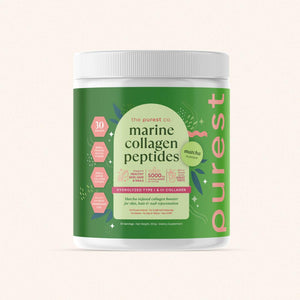
Because supplements aren't regulated as tightly as medicines, quality is the real safety question. Look for hydrolysed collagen peptides (the form most studied for absorption), a brand that shares third-party testing for heavy metals and contaminants, and a clean label with no proprietary blends hiding megadoses of added vitamins, herbs or botanicals you didn't intend to take. Our Marine Collagen Peptides are a single-ingredient hydrolysed peptide, which makes it easier to see exactly what you're getting — though if you have a fish or shellfish allergy, marine collagen isn't for you.
How does it fit into a broader prenatal routine?
Collagen is a "nice-to-have" rather than a prenatal essential. The non-negotiables in pregnancy are the basics your doctor recommends: folate, adequate iron, and a genuine prenatal multivitamin, alongside enough total protein and a varied diet. If your care team is happy for you to add collagen, treat it as a small protein boost around those foundations — not a substitute for them. Research supports hydrolysed collagen doses in the region of 2.5 to 15 grams a day in general adults, but your provider's guidance for your pregnancy comes first.
Frequently asked questions
Can collagen help with stretch marks? There's no strong evidence that oral collagen prevents or erases stretch marks, which are largely down to genetics and how quickly skin stretches. Manage expectations here.
Is marine collagen safe if I'm avoiding fish in pregnancy? Marine collagen is processed from fish and is a different consideration from eating whole fish (where mercury is the concern). Still, if you have a seafood allergy or any doubt, ask your doctor and consider alternatives.
Can I keep taking collagen while breastfeeding? Many people do, and the one available study extended into the postpartum period without issues, but it's still worth confirming with your provider as part of your overall postnatal plan.
This article is for general education and is not medical advice. Supplements support — not replace — good habits and medical care. If you're pregnant, breastfeeding, taking medication or managing a health condition, please check with your doctor or pharmacist before starting anything new.