













![[KOL] Boosters - Skin & Hair](http://thepurest.co/cdn/shop/files/affiliate_page_6_300x.png?v=1791902411)




Whey and collagen are both called protein, but they do different jobs. Whey is a complete protein that's excellent for building and maintaining muscle, while collagen peptides are studied mainly for skin. So the honest answer to "which do I need?" is often: it depends on your goal — and sometimes both make sense.
What's the actual difference between whey and collagen?
Whey is a complete protein, meaning it contains all nine essential amino acids your body can't make. It's rich in leucine, the amino acid that most strongly triggers muscle building. Collagen, by contrast, is an incomplete protein — it lacks the essential amino acid tryptophan — but it's high in the specific amino acids that make up skin, joints and connective tissue. Think of whey as all-purpose building blocks for muscle, and collagen as specialty materials aimed at skin and joints.
Which is better for muscle?
For muscle, the evidence favours whey. A randomised trial in women found whey stimulated greater muscle protein synthesis than collagen, both at rest and around exercise. If your goal is maintaining strength and tone — which becomes increasingly important for women from your 30s onward as muscle naturally declines with age — a complete protein like whey is the more efficient choice. Collagen simply doesn't provide the same muscle-building signal.
And which is better for skin?
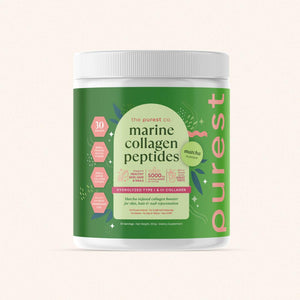
Here collagen has the more direct research. Several studies suggest collagen peptides may improve skin elasticity and hydration, though it's fair to note this evidence is often lower-quality and some is industry-funded, so expectations should stay measured. Whey supports skin more indirectly, by supplying the overall protein your body needs to build and repair tissue. Neither is a magic wand for skin, but collagen is the ingredient most often studied for it.
Why might a combined protein suit you?
If you want muscle support and a skin-focused ingredient in one convenient step, a blend can be practical. Something like Clear Whey Protein Isolate + Collagen pairs complete whey protein for muscle with collagen peptides for skin support — a light, easy-to-drink way to top up protein on busy days. As always, this works best alongside eating enough overall protein and staying active, not as a replacement for meals.
Frequently asked questions
Can I just take collagen and skip whey? If your main goal is muscle or overall protein intake, collagen alone falls short because it's incomplete. Collagen suits skin and joint goals; whey suits muscle and total protein needs.
How much protein do women actually need? Needs vary with body size and activity, but many active women benefit from more than the bare minimum. Spreading protein across meals helps. A supplement can fill gaps when food falls short.
Will protein powder make me bulky? No. Protein supports muscle maintenance and tone; it doesn't automatically create large muscles, which requires dedicated heavy training. For most women it helps with strength and body composition.
This article is for general education and is not medical advice. For personalised guidance, please speak with a qualified healthcare professional.