






![[Pre-Order] Joint Pre+Probiotic Melts](http://thepurest.co/cdn/shop/files/1_af310510-f2f3-4ee7-91c6-0c9314c437ab_300x.jpg?v=1755068216)











Short answer: you reach your peak bone mass around age 30, and afterwards the goal shifts from building bone to protecting it. Because women lose bone faster after menopause, the habits you build in your 30s genuinely shape your long-term bone health — waiting until menopause is leaving it late.
Why your 30s are the pivot point
Bone is living tissue that's constantly remodelled. Through childhood and your 20s you bank bone density; by around 30 you hit your peak. From there, the balance gradually tips toward slow loss — which accelerates after menopause when oestrogen (a bone-protective hormone) drops. The stronger your foundation now, the more buffer you have later.
What protects bone
Three pillars do the heavy lifting: weight-bearing and resistance exercise (bone responds to load by getting denser), adequate calcium and vitamin D, and enough protein — bone is roughly half protein by volume, much of it collagen. Smoking and excess alcohol work against you.
Where collagen and targeted nutrients fit
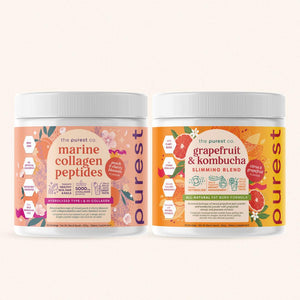
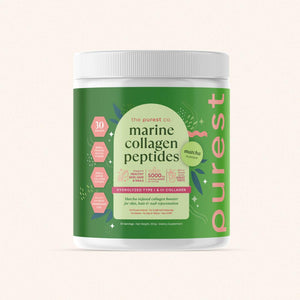
Collagen forms the flexible scaffold that minerals attach to, and some research suggests collagen peptides may support bone metabolism alongside resistance training. Our Marine Collagen Peptides provide collagen peptides, and our Daily Bone+ Drops are formulated to support bone-relevant nutrient intake. These complement — not replace — calcium, vitamin D, protein and exercise.
FAQ
Is it too early to think about bones in my 30s? No — this is exactly when protecting peak bone mass matters most.
Does collagen help bones? Bone contains collagen, and early research is encouraging, but it works alongside exercise and minerals, not instead of them.
What's the single best thing I can do? Resistance and weight-bearing exercise, consistently.
General education only, not medical advice. For bone-density concerns or osteoporosis risk, consult a healthcare professional.