




![[PRE-ORDER] Salted Caramel Slimming Coffee](http://thepurest.co/cdn/shop/files/Essentials_-_SCSC_1_300x.webp?v=1768966794)

















Last reviewed: March 2026 · The Purest Co Editorial Team · About The Purest Co
Does turmeric actually reduce inflammation?
Yes, through a well-understood mechanism. Curcumin inhibits NF-kB , the master regulator of inflammatory gene expression , reducing production of pro-inflammatory cytokines TNF-alpha, IL-1, and IL-6. Multiple RCTs show effects comparable to NSAIDs for joint inflammation without gastrointestinal side effects. Critical caveat: standard curcumin has poor bioavailability , enhanced formulations (piperine, phospholipid complexes) are required for therapeutic plasma concentrations.
Turmeric and ginseng are two of the most studied plant compounds in the world, and also two of the most oversold. They appear together on supplement shelves with claims ranging from "fights cancer" to "reverses ageing," most of which vastly exceed what the research supports. The actual evidence, stripped of the hyperbole, is genuinely impressive for specific applications, particularly for inflammation, immune function, and energy. Here's what the science actually says.
Turmeric and ginseng are deeply embedded in Singaporean and regional cuisine and traditional medicine, making evidence-based supplementation a natural extension of existing cultural practice.
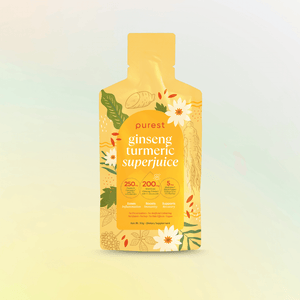
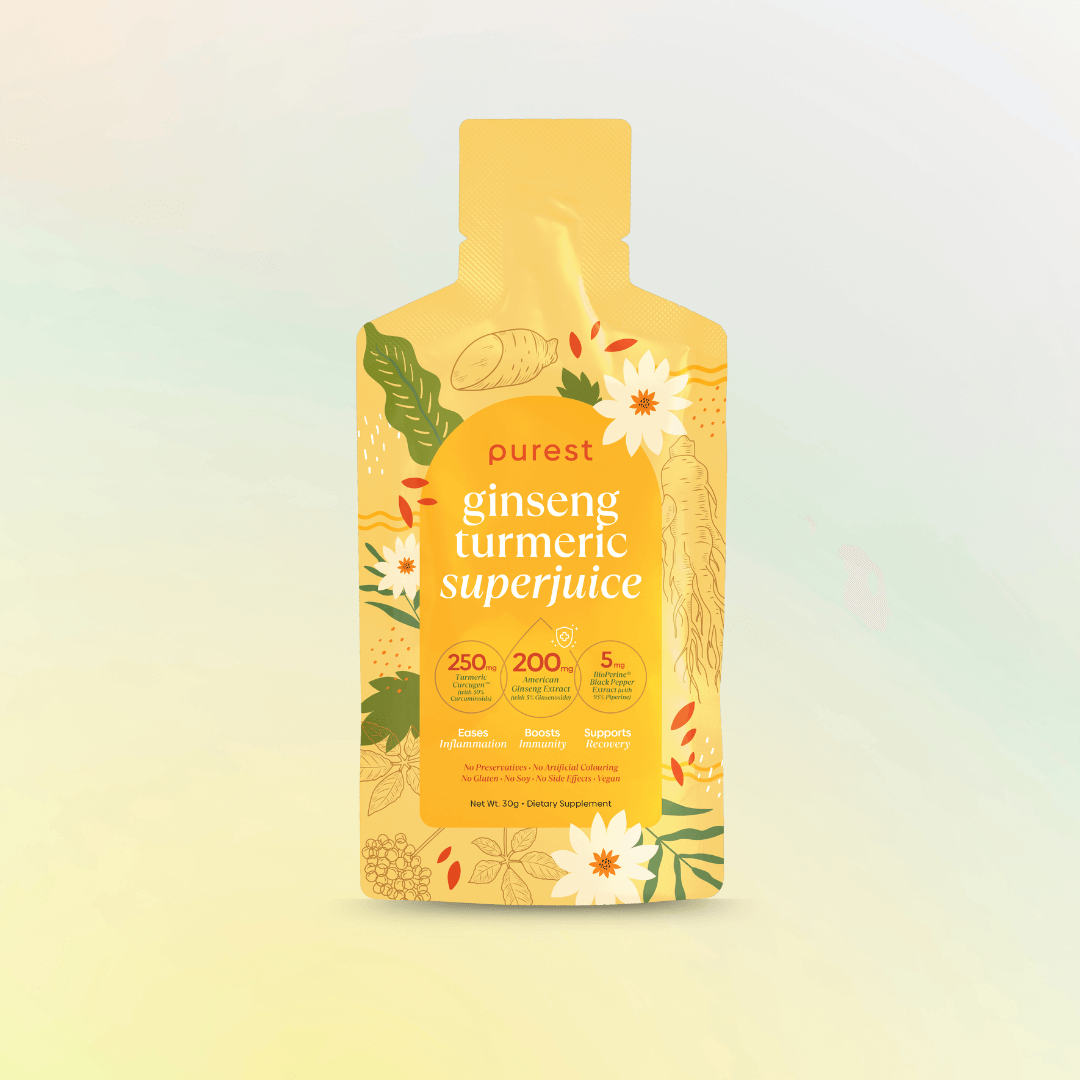
Shop Ginseng Turmeric Superjuice
Turmeric and Curcumin: What the Research Actually Shows
Turmeric's active compound is curcumin, a polyphenol with well-documented anti-inflammatory and antioxidant properties. The mechanism is well-understood: curcumin inhibits NF-kB, one of the primary master regulators of inflammatory gene expression in cells. By reducing NF-kB activity, curcumin reduces the production of pro-inflammatory cytokines including TNF-alpha, IL-1, and IL-6, the same cytokines that drive the inflammatory conditions underlying joint pain, skin inflammation, and gut barrier disruption.[1]
The clinical evidence is strongest in three areas. For joint inflammation: multiple RCTs have found curcumin supplementation produces significant reductions in joint pain and inflammatory markers comparable to non-steroidal anti-inflammatory drugs (NSAIDs) in osteoarthritis, without the gastrointestinal side effects. For gut health: curcumin reduces the intestinal inflammation associated with inflammatory bowel conditions and supports gut barrier integrity. For metabolic health: curcumin improves insulin sensitivity markers and reduces the systemic inflammation associated with metabolic syndrome.
The significant caveat is bioavailability. Standard curcumin is poorly absorbed from the gut. Most products use enhanced bioavailability formulations (piperine combinations, phospholipid complexes, or nanoparticle delivery) to achieve the plasma concentrations shown effective in trials. A curcumin product without a bioavailability enhancement is largely ineffective regardless of dose.
Ginseng: The Evidence for Energy and Immunity
Ginseng refers to several related plants, with Korean Red Ginseng (Panax ginseng) and American Ginseng (Panax quinquefolius) having the strongest clinical evidence. The active compounds are ginsenosides, which have adaptogenic, immune-modulating, and energy-supporting properties through several mechanisms.
For energy and fatigue: multiple RCTs have found Korean Red Ginseng supplementation significantly reduces subjective fatigue and improves physical performance markers compared to placebo. The mechanism is through improving mitochondrial efficiency and reducing oxidative stress in energy-producing pathways, rather than the stimulant mechanism of caffeine. This means ginseng's energy support doesn't produce the crash or tolerance development associated with stimulants.[2]
For immunity: ginsenosides directly enhance natural killer cell activity, macrophage function, and antibody production. Multiple trials have found significant reductions in upper respiratory infection frequency and duration with ginseng supplementation. A 2020 Cochrane-reviewed analysis found consistent evidence for ginseng reducing cold incidence and severity.
For cognitive function: Korean Red Ginseng has some of the strongest botanical evidence for improving working memory, attention, and mental clarity. The mechanism appears to involve improved cerebral blood flow and antioxidant protection in neural tissue.
Why They Work Together
Turmeric and ginseng address complementary aspects of the inflammation-energy-immunity relationship. Curcumin reduces the systemic inflammatory burden that impairs both energy metabolism and immune function. Ginseng directly supports the energy production machinery and immune cell activity that inflammation has been suppressing.
For people dealing with the chronic low-grade inflammation associated with gut dysbiosis, high stress, or metabolic disruption, the combination reduces the inflammatory load (turmeric) while simultaneously supporting the energy and immune capacity that inflammation has been depleting (ginseng). The two effects are genuinely synergistic rather than redundant.
Frequently Asked Questions
Does turmeric reduce inflammation?
Yes, through a well-understood mechanism. Curcumin inhibits NF-kB, the master regulator of inflammatory gene expression, reducing production of pro-inflammatory cytokines. Multiple RCTs show significant anti-inflammatory effects comparable to NSAIDs for joint inflammation, without gastrointestinal side effects. The critical caveat is that standard curcumin has poor bioavailability and requires an enhanced formulation to achieve effective plasma concentrations.
Does ginseng actually give you energy?
Yes, through a non-stimulant mechanism. Ginseng improves mitochondrial efficiency and reduces oxidative stress in energy pathways, producing sustained energy improvements without the crash or tolerance development of caffeine. Multiple RCTs show significant reductions in subjective fatigue and improvements in physical performance with Korean Red Ginseng supplementation.
Can I take turmeric and ginseng together?
Yes, and they complement each other well. Turmeric reduces systemic inflammatory burden. Ginseng supports energy production and immune function. For people with chronic low-grade inflammation, fatigue, or immune vulnerability, the combination addresses different components of the same underlying problem synergistically.
How much turmeric do I need for anti-inflammatory effects?
Standard curcumin from food or basic supplements is poorly absorbed. Clinical trials showing significant anti-inflammatory effects typically use bioavailability-enhanced curcumin at 500mg to 1,000mg per day of curcumin with a bioavailability enhancement (piperine, phospholipid complex, or nanoparticle delivery). Eating more turmeric in food doesn't achieve therapeutic plasma concentrations.
Is ginseng safe to take daily?
At recommended doses and standard formulations, Korean Red Ginseng has a good safety profile for daily use up to 12 weeks duration in most clinical trials. It should be used cautiously by people on blood thinners or diabetes medications due to potential interactions. Most healthy adults can use it daily without issues at standard doses.
Is turmeric good for gut health?
Yes. Curcumin reduces intestinal inflammation associated with inflammatory bowel conditions and supports gut barrier integrity by reducing the pro-inflammatory signalling that increases intestinal permeability. It also has prebiotic-like effects on the gut microbiome, supporting beneficial bacterial growth. The anti-inflammatory mechanism that makes curcumin relevant for joint pain is the same one that makes it useful for gut inflammation: inhibition of NF-kB and reduction of pro-inflammatory cytokine production.
What type of ginseng is best?
For energy and cognitive outcomes, Korean Red Ginseng (Panax ginseng) has the most extensive clinical evidence. For immune support, both Korean Red and American Ginseng (Panax quinquefolius) have good evidence, with American Ginseng having slightly more specific evidence for cold and upper respiratory infection reduction. Siberian ginseng (Eleutherococcus senticosus) is a different plant entirely with weaker evidence; it is not a true Panax ginseng despite the common name.
Can you take turmeric and ginseng together every day?
Yes. Both have good daily safety profiles at recommended doses (500mg to 1,000mg bioavailability-enhanced curcumin and 240mg to 400mg standardised ginseng extract per day). There are no negative interactions between them. Turmeric should be avoided at high doses by people on blood thinners (it has mild anticoagulant effects). Ginseng should be used cautiously by people on diabetes medications due to potential blood sugar interactions. For most healthy adults, daily use of both is safe and produces genuinely synergistic effects.
References
[1] Hewlings SJ et al. Foods. 2017. Curcumin: a review of its effects on human health.
[2] Reay JL et al. Nutritional Neuroscience. 2010. Effects of Panax ginseng, consumed with and without glucose, on blood glucose levels and cognitive performance.
[3] Mahmud MR et al. Gut Microbiome / PMC. 2022. Impact of gut microbiome on skin health.
This article is for informational purposes only and is not a substitute for professional medical advice, diagnosis, or treatment. Always consult a qualified healthcare provider with any questions about a medical condition.
