














 Written by Shereen, Product Management Associate · Updated 19 October 2026
What are the benefits of bird's nest?
Bird's nest may support smoother skin, immunity and brain health. In a 12-week placebo-controlled trial, a daily bird's nest extract reduced skin wrinkles in women, and lab and animal studies point to immune and brain benefits. It is the edible nest of swiftlets, made from their saliva and rich in glycoproteins, sialic acid, amino acids and minerals.
This article is for you if: you enjoy bird's nest or are thinking of starting, and want to know what it does for your skin, immunity and overall wellbeing, and how to choose and enjoy a good one.
Bird's nest has been a cornerstone of Asian wellness for centuries,[1] and in Singapore it is still a tonic many families share, from new mothers to grandparents. Modern research is now catching up with the tradition, and it supports more of bird's nest's reputation than many people expect. Here's what the science shows, what is in each spoonful, and how to choose and enjoy it.
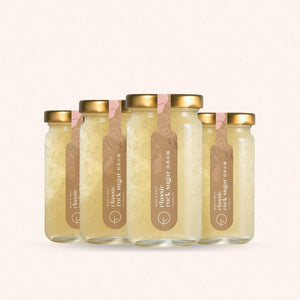
→ See Bird's Nest with Four Signature Flavors, our ready-to-drink bird's nest
In this article
- What is bird's nest?
- What's in bird's nest?
- What are the benefits of bird's nest?
- Is bird's nest good for your skin?
- Does bird's nest contain collagen?
- How is bird's nest used in traditional Chinese medicine?
- Is bird's nest good for cough?
- Is bird's nest good for women and during pregnancy?
- How do you choose good bird's nest?
- How much bird's nest should you have, and when?
- Frequently asked questions
What is bird's nest?
Bird's nest is the edible nest of swiftlets, small birds that build their nests from their own saliva, which hardens as it dries.[1] The saliva comes from a pair of glands under the bird's tongue.[2] It is a whole food, not a plant extract or a lab-made supplement, and in Chinese it is called yan wo.
Edible bird's nest comes mainly from two swiftlet species found across Southeast Asia, Aerodramus fuciphagus and Aerodramus maximus. It is collected either from swiftlet houses, buildings set up for the birds to nest in, or from natural caves.[3]
What's in bird's nest?
Bird's nest is mostly protein, and its signature nutrient is sialic acid, which sets it apart from most other foods. Here is what a nest contains:
- Glycoproteins: proteins bound to sugar chains. Protein makes up about 50 to 55% of a dried nest's weight, and scientists describe bird's nest as a mucin glycoprotein.[2] [4]
- Sialic acid: mainly N-acetylneuraminic acid (Neu5Ac). Sialic acid sits on the surface of every cell in the body, where it helps cells interact, and it plays a part in brain development.[5] Bird's nest is one of the major food sources of sialic acid, which is also studied for immune support.[6]
- Amino acids: 18 of the 20 amino acids the body uses, including 9 essential amino acids.[2]
- Minerals: calcium and sodium are the main ones, with magnesium, potassium, phosphorus and iron.[2] [3]
- EGF-like activity: researchers found an epidermal growth factor (EGF)-like activity in swiftlet nest extract. Epidermal growth factor is a signal that tells cells to grow, and the extract prompted fibroblasts, the cells that make connective tissue, to multiply in the lab.[7]
Nutrient levels vary with the swiftlet species, the region and whether the nest came from a house or a cave, which is one reason quality matters.[3]
What are the benefits of bird's nest?
Research points to benefits for skin, immunity and brain health, and a recent human trial looked at metabolism. Human trials cover skin and metabolism, while lab and animal studies help explain bird's nest's traditional uses:
- Skin: in a 12-week placebo-controlled trial in 86 women aged 40 to 60, a daily bird's nest extract significantly reduced skin wrinkles, with no adverse reactions reported.[8]
- Immunity: in mice, bird's nest helped B cells, the immune cells that make antibodies, to multiply and become active. It raised antibody levels and increased secretory IgA in the gut, a marker of mucosal immunity, the defence that protects the body's linings.[9]
- Brain health: a systematic review of animal studies found that bird's nest improved learning and memory in healthy animals and in animals with induced memory problems. It also reduced inflammation and oxidative stress in the hippocampus, the brain's memory centre.[10]
- Metabolism: in a 12-week placebo-controlled trial in 109 healthy women, daily bird's nest measurably changed blood markers of amino acid and fat metabolism, with changes showing from week 4.[11]
Is bird's nest good for your skin?
Yes, and skin is where bird's nest has its strongest human evidence. A 2024 dermatology review found promising lab, animal and early clinical results for bird's nest in sun-related skin ageing, skin barrier support, wound healing and skin brightening.[1]
- Fewer wrinkles: in the 12-week trial, women aged 40 to 60 took a bird's nest extract standardised to sialic acid, or a placebo, every day. Wrinkles measured with a skin-imaging device decreased significantly in the bird's nest group compared with placebo.[8]
- Hydration: in skin cells and in hairless mice exposed to UVB light, a standardised bird's nest extract increased skin hydration by boosting hyaluronic acid production and activating the enzyme that makes ceramides.[12]
- Moisture barrier: in human skin cells called keratinocytes, bird's nest extract switched on filaggrin, a protein the outer skin layer needs to hold in water.[13]
In Singapore, where we move between humid heat and cold air-conditioning all day, skin hydration and a strong moisture barrier are worth looking after from the inside as well as the outside.
Does bird's nest contain collagen?
Bird's nest protein is mostly glycoprotein rather than collagen.[2] [4] What research suggests is that it may help your skin make its own collagen. In mice exposed to UVB light, a bird's nest extract activated the pathway skin uses to make type I collagen, and calmed the pathway linked to wrinkle formation.[12] In rats used to model menopause, bird's nest extract increased the thickness of the dermis, the collagen-rich layer of skin.[14]
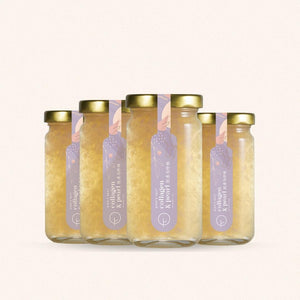
If you'd like collagen in the same spoonful, Bird's Nest with Collagen & Pearl combines 9 g of premium bird's nest per bottle with collagen peptides and pearl powder, lightly sweetened with rock sugar.
How is bird's nest used in traditional Chinese medicine?
In traditional Chinese medicine (TCM), bird's nest is a nourishing tonic, especially valued for the lungs. Its traditional uses include:[2]
- Strengthening the lungs and clearing phlegm, especially for older adults.
- Supporting the voice, and as a tonic during dry coughs.
- Supporting appetite.
- Nourishing mothers-to-be, traditionally for strong lungs and a fine complexion in both mother and child.
Modern research is now exploring these uses, from immune cells in mice to lung health in animal studies.[9] [15]
Is bird's nest good for cough?
Bird's nest has long been taken for dry coughs in traditional Chinese medicine, and early research is exploring why.[2] In mice, sialic acid-rich peptides from bird's nest reduced lung inflammation, lowering inflammatory cells in the lungs by 41.3% and the inflammatory marker TNF-α by 36.4%.[15]
Enjoy bird's nest as gentle daily nourishment, alongside the care your doctor recommends, and see a doctor if a cough lasts more than 3 weeks.[16]
Is bird's nest good for women and during pregnancy?
Two of the main human trials of bird's nest were run in women: the 12-week skin trial in women aged 40 to 60, and the 12-week metabolism trial in 109 healthy women.[8] [11] Animal research has also looked at the menopause years. In rats used to model menopause, bird's nest extract improved bone strength and skin thickness.[14]
In pregnancy, bird's nest is a long-standing tradition for mothers-to-be in Chinese families.[2] Our guidance for The Purest Co bird's nest is to enjoy it in moderation, preferably from the second trimester. Every pregnancy is different, so check with your doctor first, and read more in our guide on how to consume bird's nest during pregnancy.
How do you choose good bird's nest?
Choose genuine nest from a clear source, with the amount of nest stated on the label and a sweetness level you can enjoy every day:
- Know how much nest you're getting. Look for the grams of bird's nest per bottle, not just the words "bird's nest drink".
- House or cave, both are genuine. In a Malaysian study, house nests had more sialic acid and stronger antioxidant activity, while cave nests had more minerals such as calcium and magnesium.[3]
- Choose clean, carefully processed nests. Contaminants such as nitrite can come from swiftlet farms or from processing and storage, which is why Malaysia, the second-largest exporter after Indonesia, set quality standards for swiftlet farming and nest processing.[17]
- Don't pay extra for colour. Researchers in Singapore traced the red of "blood" nests to nitration, a chemical change in the nest's protein, and red nests contain high levels of nitrite and nitrate.[4]
- Check the sweetness. If you have bird's nest every day, a lightly sweetened or no-sugar recipe keeps it an easy everyday habit.
- Look for ethical harvesting. Ask whether nests are collected after the swiftlets have finished with them.
For more tips, read things you need to know before buying bird's nest.
How much bird's nest should you have, and when?
A little every day is the simplest way to enjoy bird's nest: both 12-week human trials gave it daily.[8] [11] Pick a time you'll stick to, such as with breakfast or as a cool treat after dinner. A daily habit matters more than the exact hour.
| Ready-to-drink bottle | Dried nest cooked at home | |
|---|---|---|
| Preparation | None: already double-boiled, so just shake and pour | Soak, pick out feathers and debris, then double-boil |
| Amount of nest | Stated on the label, for example 9 g per 150 g bottle | You weigh it yourself |
| Sweetness | Set by the recipe, from rock sugar to no sugar | Your choice, often rock sugar with red dates or wolfberries |
| Best for | A daily habit with no preparation | Weekend cooking and family meals |
Ready-to-drink details: The Purest Co bird's nest product pages. Home method: traditional double-boiled preparation.
If you have food allergies, are pregnant or take medication, check with your doctor before you start.
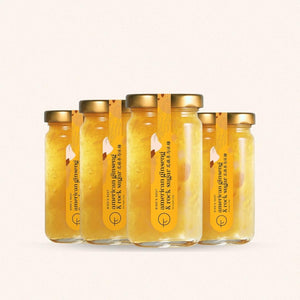
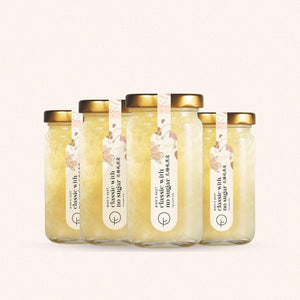
Bird's Nest with Four Signature Flavors brings our four recipes together in one box: Classic Rock Sugar, Wolfberries & Pandan, American Ginseng & Rock Sugar, and European Rose with Rock Sugar. Each 150 g bottle holds 9 g of premium bird's nest, about 1.5 to 2 full nests, ethically harvested from abandoned nests and double-boiled to traditional recipes. Have 2 tablespoons a day, best served chilled.
Shop Bird's Nest with Four Signature Flavors
Risk-free money-back guarantee
Related reading: The ultimate bird's nest flavour guide · Things you need to know before buying bird's nest · How to consume bird's nest during pregnancy
Frequently asked questions
Is a bird's nest supplement the same as bird's nest soup?
Both come from the same swiftlet nests. Bird's nest soup and ready-to-drink bottles contain the whole nest, double-boiled, while bird's nest supplements such as tablets or capsules contain an extract of the nest. The extract in the 12-week skin trial was standardised to sialic acid, the nutrient bird's nest is best known for.
Is bird's nest good for the elderly?
In traditional Chinese medicine, bird's nest has long been given to older adults to strengthen the lungs, clear phlegm and support appetite. Its soft texture makes it easy to eat, and a ready-to-drink bottle needs no cooking. If an older family member takes regular medication, check with their doctor before they start.
Can children have bird's nest?
The Purest Co bird's nest is suitable for children from 2 years old, at 1 tablespoon a day. Introduce it slowly, as you would any new food, and watch for any reaction. If your child has food allergies, check with your paediatrician first.
Does bird's nest have side effects?
Bird's nest is a traditional food enjoyed by many families, and no adverse reactions were reported in the 12-week skin trial. As with any food, if you have food allergies, are pregnant or take medication, check with your doctor before you start.
How should I store bottled bird's nest?
Keep unopened bottles in a cool, dry place, or refrigerate them on delivery to keep them as fresh as possible. Once opened, keep the bottle in the fridge, shake well before each serving and finish it within 7 days. It is best served chilled, which makes it a refreshing treat on a hot Singapore afternoon.
Key takeaways
- Bird's nest is the edible nest of swiftlets, made from their saliva and rich in glycoproteins, sialic acid, amino acids and minerals.
- In a 12-week placebo-controlled trial, a daily bird's nest extract reduced skin wrinkles in women aged 40 to 60.
- Lab and animal studies suggest bird's nest may support immunity, brain health and skin hydration.
- In traditional Chinese medicine, bird's nest is a tonic for the lungs, appetite and mothers-to-be.
- Choose bird's nest with the amount of nest stated on the label, and enjoy a little every day.

About the author: Shereen is a Product Management Associate at The Purest Co. A Master's graduate in Pharmacy from Monash University, she brings four years of research experience to product development, with a focus on evidence-based, thoughtfully formulated supplements that support everyday wellbeing.
References
[1] Wang J et al. The potential cutaneous benefits of edible bird's nest. Arch Dermatol Res. 2024.
[2] Lee TH et al. Edible bird's nest: the functional values of the prized animal-based bioproduct from Southeast Asia. A review. Front Pharmacol. 2021.
[3] Quek MC et al. Characterization of edible bird's nest of different production, species and geographical origins using nutritional composition, physicochemical properties and antioxidant activities. Food Res Int. 2018.
[4] Shim EK, Lee SY. Nitration of tyrosine in the mucin glycoprotein of edible bird's nest changes its color from white to red. J Agric Food Chem. 2018.
[5] Zhang T et al. Dietary sialic acids: distribution, structure, and functions. Crit Rev Food Sci Nutr. 2024.
[6] Ling AJW et al. Review of sialic acid's biochemistry, sources, extraction and functions with special reference to edible bird's nest. Food Chem. 2022.
[7] Kong YC et al. Evidence that epidermal growth factor is present in swiftlet's (Collocalia) nest. Comp Biochem Physiol B. 1987.
[8] Kim HM et al. Anti-wrinkle efficacy of edible bird's nest extract: a randomized, double-blind, placebo-controlled, comparative study. Front Pharmacol. 2022.
[9] Zhao R et al. The improvement effects of edible bird's nest on proliferation and activation of B lymphocyte and its antagonistic effects on immunosuppression induced by cyclophosphamide. Drug Des Devel Ther. 2016.
[10] Ismail M et al. Efficacy of edible bird's nest on cognitive functions in experimental animal models: a systematic review. Nutrients. 2021.
[11] Zhou S et al. Metabolic effects of dietary edible bird's nest intake: a 12-week double-blind randomized controlled metabolomics study. Food Res Int. 2026.
[12] Kim OK et al. Standardized edible bird's nest extract prevents UVB irradiation-mediated oxidative stress and photoaging in the skin. Antioxidants (Basel). 2021.
[13] Lai QWS et al. Edible bird's nest, an Asian health food supplement, possesses moisturizing effect by regulating expression of filaggrin in skin keratinocyte. Front Pharmacol. 2021.
[14] Matsukawa N et al. Improvement of bone strength and dermal thickness due to dietary edible bird's nest extract in ovariectomized rats. Biosci Biotechnol Biochem. 2011.
[15] Li Q et al. Structural characterization and efficacy in alleviating lung inflammation of sialylated glycopeptides from edible bird's nest. Nutrients. 2025.
[16] NHS. Cough. Reviewed 8 December 2023.
[17] Yeo BH et al. Potential residual contaminants in edible bird's nest. Front Pharmacol. 2021.
These statements have not been evaluated by any regulatory authority. This product is not intended to diagnose, treat, cure, or prevent any disease. Individual results may vary. Consult a healthcare provider before use if you are pregnant, breastfeeding, or on prescribed medication.

