





![[Pre-Order] Joint Pre+Probiotic Melts](http://thepurest.co/cdn/shop/files/1_af310510-f2f3-4ee7-91c6-0c9314c437ab_300x.jpg?v=1755068216)













Last reviewed: March 2026 · The Purest Co Editorial Team · About The Purest Co
Is collagen or retinol better for anti-ageing?
They're not directly comparable , they work at different layers. Retinol renews the epidermis (surface layer), accelerating cell turnover and reducing surface pigmentation. Oral collagen rebuilds the dermis (structural layer), improving firmness and elasticity. For comprehensive anti-ageing, combining them addresses both layers simultaneously. Each achieves outcomes the other cannot.
Two ingredients dominate the anti-ageing conversation: retinol and collagen. They're both effective, they're both well-studied, and they're frequently positioned as competing choices when they're actually doing different things at different layers of the skin. Choosing between them based on "which one is better" is the wrong question. Understanding what each one does tells you exactly when, how, and whether to combine them.
In Singapore's year-round UV environment, collagen breakdown is accelerated compared to temperate climates , making both internal collagen support and retinol's matrix-metalloproteinase inhibition more valuable than in seasonal climates.
What Retinol Actually Does
Retinol is a vitamin A derivative that works primarily at the epidermis, the outermost layer of skin. It accelerates cell turnover (bringing fresh cells to the surface faster), stimulates collagen production in the dermis through retinoic acid receptor activation, reduces the activity of enzymes that break down existing collagen (matrix metalloproteinases), and normalises irregular pigmentation by affecting melanocyte signalling.
Retinol is a topical intervention. It works where it's applied, from the outside in. Its effects on collagen production are real but secondary to its primary cell turnover and surface renewal effects. The collagen-stimulating effect of topical retinol is meaningful but modest compared to what's achievable through oral collagen peptide supplementation, which delivers the stimulus throughout the entire dermis simultaneously rather than just at the surface.
What Oral Collagen Supplementation Does
Hydrolysed collagen peptides work primarily at the dermis, the deeper structural layer of skin that determines firmness, elasticity, and resistance to wrinkle formation. When collagen peptides are absorbed into the bloodstream, they accumulate in dermal tissue and stimulate fibroblasts throughout the dermis to increase collagen production. This produces structural improvements in skin density and elasticity from within the tissue rather than at the surface.
Oral collagen also supports the extracellular matrix quality and hydration capacity of the dermis, neither of which topical retinol meaningfully addresses. The result is skin that holds moisture better, has more structural support against gravitational sagging, and shows improved texture from the inside out rather than from the surface down.[1]
Why They Work Better Together
Retinol and oral collagen target genuinely different layers with genuinely different mechanisms. Retinol renews the surface, reduces surface pigmentation, and provides a modest collagen stimulus from above. Oral collagen rebuilds the structural foundation from below. Their effects are additive because they're addressing the ageing process from opposite ends simultaneously.
People who use only retinol often notice surface renewal without the structural improvement that prevents new lines from forming. People who use only oral collagen notice improved elasticity and firmness without the surface renewal that reduces existing pigmentation and texture irregularities. Combining them provides the full picture: renewed surface plus structural foundation.
The Timeline Difference
Retinol produces visible surface changes relatively quickly: 4 to 8 weeks for improvements in skin texture and tone. The irritation, purging, and photosensitivity of the adjustment period are the price of this faster surface action.
Oral collagen works on the longer timeline of the dermis: 8 to 12 weeks for measurable elasticity and firmness improvements, 3 to 6 months for significant structural changes. No irritation, no adjustment period, consistent daily supplementation required throughout.
This timeline difference is part of why people often underestimate oral collagen: the surface changes retinol produces are more immediately visible than the structural changes collagen produces, even though the structural changes are often more significant for long-term ageing outcomes.
Vitamin C: The Third Piece
Vitamin C is essential to both pathways. It's a required cofactor for collagen synthesis (without it, the amino acids provided by collagen peptides can't be assembled into new collagen fibres). And it's a direct antioxidant that neutralises the free radicals that accelerate collagen breakdown and drive photo-ageing. A comprehensive anti-ageing approach that includes oral collagen, topical retinol, and adequate vitamin C covers all three major anti-ageing mechanisms: surface renewal (retinol), structural rebuilding (collagen), and oxidative stress protection (vitamin C).
Who Should Prioritise Which
For people in their 20s to early 30s: oral collagen for prevention is more important than retinol. The structural foundation is still intact; maintaining it is easier than rebuilding it later. Retinol is optional and should be introduced cautiously.
For people in their mid-30s to 40s: both are relevant. Collagen decline is now measurable and its structural consequences are beginning to appear. Retinol addresses surface changes. Oral collagen addresses the structural loss driving them.
For people with inflammatory skin conditions (acne, eczema, rosacea): retinol should be approached very cautiously as it can aggravate these conditions. Oral collagen and gut health support are the priority interventions, with retinol introduced only after the inflammatory driver is addressed.
| Retinol (Topical) | Oral Collagen | Vitamin C | |
|---|---|---|---|
| Layer | Epidermis (surface) | Dermis (structural) | Both |
| Primary effect | Cell turnover, pigmentation | Firmness, elasticity | Antioxidant, synthesis cofactor |
| Timeline | 4–8 weeks | 8–12+ weeks | 4–6 weeks |
| Best for | Texture, tone, fine lines | Sagging, laxity, density | UV protection, collagen synthesis |
| Can irritate? | Yes, especially initially | No | Rarely (topical) |
The Purest Co Collagen Range
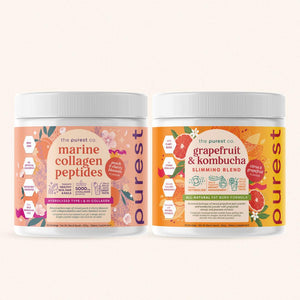
Collagen Glow Berries combines hydrolysed marine collagen peptides with Vitamin C, addressing both the collagen substrate and the cofactor requirement simultaneously. Formulated for daily use alongside any topical routine including retinol.
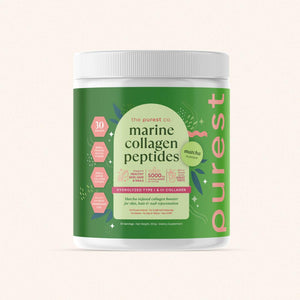
Marine Collagen Peptides provides high-dose hydrolysed marine collagen for people whose primary focus is structural skin improvement and firmness.
Frequently Asked Questions
Is collagen or retinol better for anti-ageing?
They're not directly comparable because they work at different layers. Retinol works topically at the epidermis, accelerating surface renewal and reducing pigmentation. Oral collagen works systemically at the dermis, rebuilding the structural foundation that determines firmness and elasticity. For comprehensive anti-ageing, combining them addresses both layers simultaneously.
Can I take collagen and use retinol at the same time?
Yes, and this is the most comprehensive approach. They work at different layers through different mechanisms and have no negative interaction. Retinol addresses surface renewal while oral collagen addresses structural rebuilding. The effects are genuinely additive.
How long does oral collagen take to work compared to retinol?
Retinol produces surface changes in 4 to 8 weeks. Oral collagen produces measurable elasticity and firmness improvements at 8 to 12 weeks and significant structural changes at 3 to 6 months. Collagen takes longer but its effects are structural rather than surface, which matters more for long-term skin ageing outcomes.
Why do I need vitamin C with collagen?
Vitamin C is a required cofactor for collagen synthesis. Without adequate vitamin C, the amino acids from collagen peptides cannot be assembled into new collagen fibres. It also neutralises the free radicals that break down existing collagen. Collagen supplements that include vitamin C or are taken alongside dietary vitamin C produce better outcomes than collagen alone.
When should I start taking collagen for skin?
Earlier is better. Collagen production declines from the mid-20s at approximately 1% per year. Starting supplementation in the mid-20s to early 30s maintains the structural foundation before significant loss occurs. Starting later (40s or beyond) can partially restore lost collagen but the timeline and dose requirements increase with more established decline.
What percentage retinol should I start with?
Start with 0.025% to 0.05% retinol (or retinaldehyde, which is gentler) used 2 to 3 times per week, building to nightly use over 4 to 8 weeks as skin adapts. People with sensitive or compromised skin barriers should start at the lowest concentration available and introduce even more slowly. The irritation, dryness, and purging of the adjustment period are real and can be minimised by buffering (applying over moisturiser) and starting slowly.
Can I use collagen and vitamin C serum together?
Yes, and this is an effective combination. Topical vitamin C inhibits tyrosinase and reduces surface oxidative stress. Oral collagen peptides provide the substrate for dermal collagen production. And vitamin C is required as a cofactor for that collagen synthesis to occur. Using topical vitamin C and taking oral collagen with vitamin C addresses multiple layers simultaneously: surface antioxidant protection, fibroblast stimulation from collagen peptides, and the cofactor availability needed for new collagen production.
Does retinol destroy collagen?
No, retinol stimulates collagen production and inhibits the enzymes (matrix metalloproteinases) that break down existing collagen. However, the irritation and inflammation that can occur during the retinol adjustment period can temporarily increase inflammatory markers that affect collagen, which is why starting slowly minimises this. Once past the adjustment period, retinol has a net positive effect on collagen content in the skin.
References
[1] Choi FD et al. Journal of Drugs in Dermatology. 2019. Oral collagen supplementation: a systematic review of dermatological applications.
[2] Zasada M et al. Dermatology and Therapy. 2019. Retinoids: active molecules influencing skin structure formation.
[3] Martini M et al. Nutrients. 2023. A review of the evidence for collagen peptide supplementation on skin health.
This article is for informational purposes only and is not a substitute for professional medical advice, diagnosis, or treatment. Always consult a qualified healthcare provider with any questions about a medical condition.