


















Last reviewed: March 2026 · The Purest Co Editorial Team · About The Purest Co
Why does skin lose collagen during menopause?
Oestrogen is a primary regulator of fibroblast activity — the cells that produce collagen in the dermis. As oestrogen declines during perimenopause and menopause, fibroblast activity decreases significantly. Women lose approximately 30% of their dermal collagen in the first 5 years post-menopause, and approximately 2% per year thereafter. This is the single largest driver of skin ageing changes in women — more significant than UV or chronological ageing alone.
This article is for you if: You are in perimenopause or menopause and noticing accelerated skin changes — loss of firmness, elasticity, hydration, or increased fine lines — and want to understand the biology and evidence-based support options.
Less relevant if: You are under 35 and not yet experiencing hormonal skin changes — the mechanisms discussed here are specific to oestrogen decline.
The skin changes that many women notice in their 40s and 50s are not primarily a consequence of ageing in the abstract. They are driven by a specific, measurable hormonal shift: the decline of oestrogen. This distinction matters because it changes the support strategy from general anti-ageing to targeted collagen and skin matrix support during a defined biological window.
→ Explore collagen and skin support supplements at The Purest Co
In this article
How Oestrogen Regulates Collagen
Oestrogen directly influences fibroblast gene expression. Fibroblasts — the primary collagen-producing cells in the dermis — have oestrogen receptors. When oestrogen binds to these receptors, it upregulates collagen Type I and Type III production, hyaluronic acid synthesis, and the production of tissue inhibitors of metalloproteinases (TIMPs) that protect existing collagen from enzymatic degradation. When oestrogen declines, all three protective mechanisms reduce simultaneously: less new collagen is produced, less hyaluronic acid hydrates the dermis, and existing collagen is degraded faster by unopposed matrix metalloproteinases (MMPs).
The Collagen Loss Timeline
Perimenopause (typically ages 40–50): Oestrogen fluctuates and begins its overall decline. Collagen loss begins accelerating. Many women notice the first skin texture and elasticity changes during this phase. First 5 years post-menopause: The most rapid collagen loss period — approximately 30% of dermal collagen is lost. Skin thickness decreases by approximately 1.13% per year. Post-menopausal ongoing: Collagen continues to decline at approximately 2.1% per year indefinitely. The rate is slower than the initial post-menopausal drop but continues compounding.[1]
What Changes and Why
Elasticity loss: Reduced collagen density and cross-linking means skin does not spring back as readily. Dryness and dehydration: Reduced hyaluronic acid synthesis means the dermis holds less water. Thinning: Less collagen means a thinner dermis, making blood vessels more visible and skin more fragile. Fine lines and wrinkles: Volume loss from reduced dermal density creates surface wrinkling. Slower wound healing: Fibroblast activity reduction affects the skin’s repair capacity.
Beyond Skin: Bones and Joints
The same oestrogen-driven collagen decline affects bones and joints. Bone density decreases as collagen provides the matrix for mineral deposition. Joint cartilage, which is collagen-based, becomes more vulnerable. Supporting collagen production during this window has benefits beyond skin — it supports the entire connective tissue system simultaneously.
Evidence-Based Support Strategies
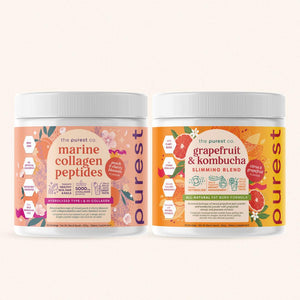
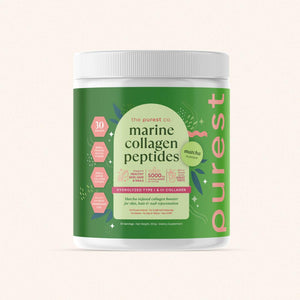
The evidence-based approach to supporting skin during perimenopause and menopause combines: marine collagen supplementation at 5 to 10g daily (directly provides the collagen peptides that stimulate fibroblast activity even when oestrogen is low); vitamin C at 500mg daily (required cofactor for collagen synthesis); antioxidant support with astaxanthin (reduces UV and oxidative collagen degradation that compounds hormonal loss); consistent SPF 50 (UV-driven collagen degradation now compounds on top of hormonal loss — the two effects multiply); and ceramide supplementation (supports barrier function as both collagen and barrier lipids decline).
Why Collagen Supplementation Matters More Now
Before perimenopause, fibroblasts respond to oestrogen signalling to maintain collagen production. During and after menopause, this primary production stimulus is reduced. Hydrolysed collagen peptides provide an alternative fibroblast stimulus — the collagen peptides themselves act as signalling molecules that upregulate fibroblast collagen and hyaluronic acid production through a mechanism independent of oestrogen.[2] This makes collagen supplementation more impactful during perimenopause and menopause than at younger ages when oestrogen-driven production is already high.
Common Mistakes
Attributing all skin changes to ageing rather than oestrogen decline. The distinction matters because the support strategy is different. General anti-ageing routines miss the specific collagen and matrix support window that perimenopause and menopause represent.
Starting collagen supplementation after menopause rather than during perimenopause. The highest-value window is during perimenopause when collagen loss is accelerating but has not yet reached its peak rate. Starting earlier preserves more of the existing collagen infrastructure.
Frequently Asked Questions
How much collagen do you lose during menopause?
Approximately 30% of dermal collagen in the first 5 years post-menopause, then approximately 2% per year thereafter. This is driven by oestrogen decline reducing fibroblast activity.
Does collagen help with menopause skin?
Yes. Marine collagen supplementation at 5 to 10g daily provides fibroblast-stimulating peptides through a mechanism independent of oestrogen. Clinical trials show measurable improvements in skin elasticity, hydration, and dermal density in postmenopausal women.
At what age does collagen loss accelerate?
Collagen loss accelerates during perimenopause, typically beginning in the mid-40s. The most rapid period is the first 5 years post-menopause.
Can you rebuild collagen after menopause?
You can stimulate new collagen production through supplementation, but the total collagen level is unlikely to return to pre-menopausal levels. The goal is maintaining and rebuilding from the current baseline.
What supplements help with menopause skin changes?
Marine collagen (5–10g daily), vitamin C (500mg daily), astaxanthin (4–12mg daily), and ceramide supplementation address the four key mechanisms: collagen production, synthesis cofactor, oxidative protection, and barrier support.
Does HRT help with collagen loss?
HRT (hormone replacement therapy) has evidence for reducing the rate of collagen decline by maintaining oestrogen levels. However, this is a medical decision to be made with a healthcare provider. Collagen supplementation provides support through an independent mechanism and is compatible with or without HRT.
When should I start taking collagen for perimenopause?
The ideal window is during perimenopause — typically mid-40s — when collagen loss is accelerating but has not yet reached peak rate. Starting during perimenopause preserves more existing collagen than waiting until post-menopause.
90-Day Money Back Guarantee
Free shipping on orders above $60
Key Takeaways
- Oestrogen decline is the primary driver of accelerated collagen loss in perimenopause and menopause — approximately 30% in the first 5 years post-menopause.
- Collagen peptides stimulate fibroblasts through an oestrogen-independent mechanism, making supplementation more impactful during this period.
- The highest-value window for starting collagen supplementation is during perimenopause, before peak loss rate.
- UV-driven collagen degradation now compounds on top of hormonal loss — daily SPF becomes even more critical.
- Supporting the full connective tissue system — skin, bones, joints — simultaneously with collagen peptides addresses the systemic nature of oestrogen-driven collagen decline.
References
[1] Brincat M et al. A study of the decrease of skin collagen content, skin thickness, and bone mass in the postmenopausal woman. Obstet Gynecol. 1987.
[2] Bolke L et al. A Collagen Supplement Improves Skin Hydration, Elasticity, Roughness, and Density. Nutrients. 2019.
This article is for informational purposes only and is not a substitute for professional medical advice, diagnosis, or treatment. Always consult a qualified healthcare provider with any questions about a medical condition.