

















Last reviewed: March 2026 · The Purest Co Editorial Team · About The Purest Co
Why is my skin dull even with a good skincare routine?
Because most skincare works on the epidermis — the surface layer — while dullness often originates in the dermis and from internal factors: reduced collagen density, poor gut microbiome diversity, chronic low-grade inflammation, and inadequate sleep-driven skin repair. These are not problems a serum can address regardless of how well-formulated it is.
This article is for you if: You have a consistent skincare routine with quality products but your skin still looks tired, flat, or lacking radiance — and you suspect there might be something else going on.
Less relevant if: You are new to skincare and have not yet established a consistent routine — the basics of cleansing, SPF, and moisturising should come first before investigating internal causes.
You have vitamin C, niacinamide, a good SPF, and a hyaluronic acid serum. Your routine is textbook. And your skin still looks tired, flat, and dull by midday. This is one of the most common frustrations in skincare — and the reason it keeps happening is that dullness has multiple causes, several of which sit entirely outside what a topical product can reach.
→ Explore skin radiance supplements at The Purest Co
In this article
What Causes Skin Dullness
Dullness is not a single condition — it is the visible result of multiple possible mechanisms. Surface accumulation: dead skin cell build-up reduces light reflection. This is the only cause that exfoliants and certain serums directly address. Reduced dermal density: as collagen and hyaluronic acid decline, skin loses its ability to scatter light from within. Impaired microcirculation: reduced blood flow means less colour and vitality in the skin. Gut microbiome imbalance: dysbiosis drives low-grade systemic inflammation that chronically stresses skin cells. Oxidative stress: inadequate antioxidant intake relative to UV and pollution load causes cellular stress visible as grey, tired-looking skin. Sleep debt: overnight repair requires growth hormone and melatonin release — both significantly reduced with insufficient sleep.
What Topicals Can and Cannot Do
A well-designed topical routine addresses surface causes: dead cell accumulation, barrier compromise, and surface dehydration. Vitamin C serums, consistently used, reduce epidermal pigmentation and support surface collagen. Niacinamide improves barrier function and melanin transfer. These are real, evidence-backed effects. What topicals cannot do is reach the dermis in meaningful concentrations, influence the gut microbiome, restore sleep-driven repair processes, or address systemic oxidative stress. If your skincare routine is already well-constructed and you are still seeing dullness, the next productive step is almost always internal.
The Gut-Skin Radiance Connection
The gut microbiome influences skin through the gut-skin axis. When gut microbiome diversity is high and the intestinal barrier is intact, systemic inflammation is low. When dysbiosis is present, bacterial endotoxins can enter the bloodstream through a compromised gut lining, triggering low-grade inflammation visible in the skin as impaired barrier function, reduced cellular energy, and a visibly dull, stressed appearance.[1] Supporting gut microbiome diversity with probiotics and prebiotics reduces this inflammatory load at the source.
How Collagen Loss Changes Skin Luminosity
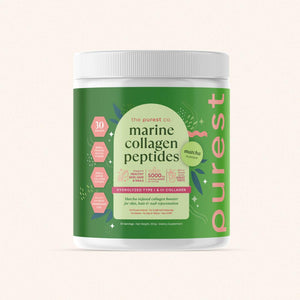
Luminous skin is largely a function of dermal structure. When the dermis is dense with collagen and hydrated with hyaluronic acid, it scatters and reflects light from within, creating the appearance of glow even without surface radiance. As collagen declines — beginning in the mid-to-late 20s, accelerated by Singapore's high UV — this internal scattering reduces. The result is a flatter, more tired appearance regardless of surface skincare. Marine collagen supplementation gradually rebuilds this internal light-scattering structure.
Sleep and Overnight Skin Repair
Between 11pm and 3am, growth hormone release peaks and skin cell mitosis is most active. Melatonin, peaking around 2 to 3am in a normal sleep pattern, is a potent antioxidant concentrated in skin cells during this window. Disrupted sleep cuts off both the growth hormone-driven repair cycle and the melatonin antioxidant peak. The result is accumulating cellular stress directly visible as dullness and uneven skin tone, independent of any skincare routine.
Dullness in Singapore's UV Climate
Singapore's year-round UV index of 10 to 12 accelerates collagen degradation and increases oxidative stress load on skin cells beyond what most global skincare research accounts for. This means antioxidant intake — particularly from vitamin C, astaxanthin, and polyphenol-rich ingredients — has a higher baseline requirement here than in temperate climates. Persistent dullness in Singapore is often a combination of unaddressed UV-driven collagen loss and chronic oxidative stress that surface skincare routines alone cannot resolve.
Common Mistakes
Adding more topical steps when the routine is already comprehensive. If you already use vitamin C, niacinamide, SPF, and a moisturiser, adding a fifth product is unlikely to address persistent dullness. The cause is almost certainly internal.
Treating gut health as separate from skin health. The gut-skin axis is a well-characterised physiological connection. Gut dysbiosis produces measurable skin effects. If your diet is low in fibre and fermented foods, this is a significant unaddressed dullness driver.
Frequently Asked Questions
Why is my skin still dull even with a good skincare routine?
Because dullness has multiple causes — surface, dermal, gut-driven, and sleep-driven — and most skincare routines only address the surface. Reduced dermal collagen density, gut dysbiosis-driven inflammation, and high UV stress all cause dullness that topicals cannot reach.
What is the fastest way to get glowing skin?
For surface glow: consistent vitamin C, gentle exfoliation, and hydration. For deeper radiance, the processes are slower: improving gut microbiome diversity with probiotics (measurable changes at 4 to 8 weeks), supporting dermal collagen with oral marine collagen (visible changes at 8 to 12 weeks), and consistently protecting collagen with SPF.
Does gut health affect skin radiance?
Yes. Gut dysbiosis drives low-grade systemic inflammation via the gut-skin axis, which chronically stresses skin cells and impairs their function. Improving gut microbiome diversity with pre and probiotics reduces this inflammatory load and measurably improves skin quality, including radiance.
Can probiotics improve skin dullness?
There is growing evidence that oral Lactobacillus and Bifidobacterium strains improve skin radiance markers by reducing the systemic inflammation that impairs skin cell function. Effects are typically measurable at 6 to 12 weeks of consistent use.
Does collagen make your skin glow?
Yes, through restoring dermal light-scattering structure. A dense dermis with adequate collagen and hyaluronic acid scatters light from within the skin, creating a luminous appearance. Marine collagen supplementation measurably increases dermal density at 8 to 12 weeks of consistent daily use.
Why does my skin look dull in Singapore's climate?
Singapore's year-round UV index of 10 to 12 accelerates collagen degradation and increases oxidative stress on skin cells beyond temperate climate levels. Antioxidant intake and collagen support needs are higher here.
How much sleep do I need for good skin?
7 to 8 hours of consistent sleep is the window during which growth hormone drives skin cell repair and melatonin provides antioxidant protection to skin cells. Chronic sleep below 6 hours measurably impairs skin barrier function and increases skin oxidative stress markers.
Shop Skin Glow Pre+Probiotic Melts
90-Day Money Back Guarantee
Free shipping on orders above $60
Key Takeaways
- Skin dullness has surface, dermal, gut-driven, and sleep-driven causes — most skincare routines address only the surface.
- Gut dysbiosis drives low-grade inflammation via the gut-skin axis that directly impairs skin cell function and radiance.
- Collagen loss reduces the dermis's ability to scatter light from within — the internal glow no serum can replace.
- Singapore's extreme UV index accelerates collagen degradation and raises the antioxidant threshold for maintaining skin quality.
- If your routine is well-built, persistent dullness almost always has an internal cause.
References
[1] Salem I et al. The Gut Microbiome as a Major Regulator of the Gut-Skin Axis. Front Microbiol. 2018.
[2] Bolke L et al. A Collagen Supplement Improves Skin Hydration, Elasticity, Roughness, and Density. Nutrients. 2019.
This article is for informational purposes only and is not a substitute for professional medical advice, diagnosis, or treatment. Always consult a qualified healthcare provider with any questions about a medical condition.