







![[Pre-Order] Joint Pre+Probiotic Melts](http://thepurest.co/cdn/shop/files/1_af310510-f2f3-4ee7-91c6-0c9314c437ab_300x.jpg?v=1755068216)














Last reviewed: March 2026 · The Purest Co Editorial Team · About The Purest Co
Why does stress cause breakouts?
Cortisol from stress directly stimulates sebaceous glands to increase sebum production, impairs the skin barrier, degrades collagen, and increases skin inflammatory sensitivity. Simultaneously, cortisol disrupts the gut microbiome within days, creating gut-driven systemic inflammation that amplifies the direct cortisol effects. The skin is being attacked from both directions at once.
You have a big presentation, a difficult week, or a period of sustained pressure, and your skin breaks out. Not around the same time by coincidence. Because of it. The stress-skin connection is one of the most well-documented in dermatology, and it's one of the least effectively addressed because most people treat the breakout topically while the stress continues driving new ones from within.
Singapore consistently ranks among the world's most stressed cities, making the stress-skin pathway one of the most clinically relevant skin health drivers for local residents.
Here's the exact mechanism, why gut health is the missing piece most stress-skin advice ignores, and what actually interrupts the cycle.
Shop Ashwa Lychee Drink for stress and skin support
The Stress-Skin Pathway: What's Actually Happening
When you experience stress, the hypothalamus triggers a cascade ending in cortisol production from the adrenal glands. Cortisol is useful acutely: it mobilises energy, sharpens focus, and suppresses non-essential functions temporarily. The skin is considered non-essential in a stress context. Its repair functions, barrier maintenance, and anti-inflammatory processes are all downregulated in favour of immediate survival priorities.
Cortisol also directly stimulates sebaceous glands to increase sebum production. More sebum means more substrate for acne-causing bacteria, more pore congestion, and a more inflammatory skin environment. It breaks down collagen (the structural protein of the skin), impairs the skin barrier, and increases transepidermal water loss. Simultaneously, it increases the skin's sensitivity to inflammatory signals, so stimuli that would normally be mild produce more pronounced inflammatory responses.[1]
The Gut Amplification Layer
Here's the part that most stress-skin discussions miss. Cortisol doesn't just act on skin directly. It disrupts the gut microbiome within days, reducing beneficial bacterial populations and increasing intestinal permeability. The resulting gut dysbiosis then drives systemic inflammation through the gut-skin axis that compounds the direct cortisol effects on skin.
This creates a two-stage amplification: cortisol from stress acts on the skin directly, and the gut dysbiosis that cortisol creates simultaneously increases the systemic inflammatory load that reaches the skin from the inside. The skin is being attacked from both directions simultaneously, which is why stress-related breakouts tend to be more severe and longer-lasting than breakouts from other triggers.
The timing explains the delay people often notice between stressful periods and their worst skin: the direct cortisol effect is relatively immediate, but the gut dysbiosis it causes develops over days and its downstream inflammatory consequences take days to weeks to fully manifest. The breakout that appears a week after the stressful period has passed often reflects the gut disruption caused during it.
The Stress-Sleep-Skin Triangle
Stress impairs sleep quality by elevating cortisol and disrupting sleep architecture. Sleep deprivation then further elevates cortisol, creating a self-amplifying loop. For the skin, inadequate sleep means reduced release of growth hormone (which stimulates collagen synthesis and cellular repair overnight), increased cortisol exposure, and reduced blood flow to the skin during what should be the primary repair window.
People who manage stress but sleep poorly, or who sleep well during stressful periods through exhaustion but at low sleep quality, still show the skin consequences of cortisol elevation. The stress-sleep interaction is simultaneous and interconnected with the skin consequences of both.
Breaking the Stress-Gut-Skin Loop
The most effective intervention targets multiple points in the loop simultaneously. Stress management reduces the cortisol input. Gut microbiome support reduces the amplification that gut dysbiosis adds. And direct skin support manages the surface expression while the internal work happens.
For gut microbiome support specifically: research has shown that the gut microbiome itself modulates the HPA axis response to stress. A more diverse, healthy microbiome produces a more measured cortisol response to the same stressor. This means gut health improvement is both a downstream benefit (reducing the gut damage from stress) and an upstream intervention (reducing the cortisol response to future stress).
Adaptogens like ashwagandha, which have clinical evidence for reducing cortisol by up to 27 to 30% with consistent use, directly address the cortisol input at the source. Combined with gut microbiome restoration, this addresses both the cause and the amplification mechanism.
Frequently Asked Questions
Why does stress cause breakouts?
Cortisol from stress directly stimulates sebaceous glands to increase sebum production, impairs the skin barrier, degrades collagen, and increases skin inflammatory sensitivity. Simultaneously, cortisol disrupts the gut microbiome within days, creating gut-driven systemic inflammation that reaches the skin and amplifies the direct cortisol effects. The combination of both pathways is why stress breakouts tend to be more severe and persistent than other triggers.
Why do I break out after a stressful period rather than during it?
The direct cortisol effect on skin is relatively immediate but the gut dysbiosis cortisol creates takes days to develop, and its downstream inflammatory consequences take days to weeks to manifest at the skin. The breakout appearing a week after the stressful period often reflects the gut disruption that occurred during it, not a new stressor.
Can stress permanently damage your skin?
Chronic sustained stress causes measurable collagen degradation (cortisol is a collagenase activator), accelerates the formation of fine lines and textural changes, and can establish a persistent state of gut dysbiosis that maintains elevated systemic inflammatory load even after acute stress resolves. This is genuinely reversible with consistent gut restoration and stress management, but the timeline for reversal is months rather than weeks.
What is the best supplement for stress-related skin?
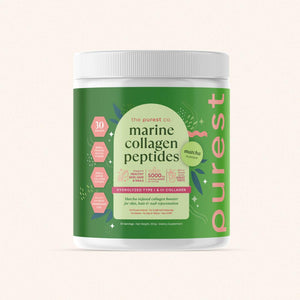
A combination approach works best. Ashwagandha addresses the cortisol source (27 to 30% cortisol reduction in clinical trials). Combined pre and probiotic supplementation addresses the gut dysbiosis amplification. Collagen with vitamin C supports repair of the barrier and structural damage that stress caused. The Purest Co Ashwa Lychee Drink and skin probiotic range address both the source and the amplification simultaneously.
Does gut health affect how stressed you are?
Yes, bidirectionally. The gut microbiome directly modulates HPA axis sensitivity and cortisol production. A healthier, more diverse microbiome produces a more measured cortisol response to the same stressor. Improving gut health is both a response to stress-driven gut damage and an upstream intervention that makes future stress less physiologically damaging to the gut and skin.
How do I stop stress breakouts?
Addressing stress breakouts requires working on both the cortisol source and the gut amplification layer simultaneously. For cortisol: adaptogens like ashwagandha (which have clinical evidence for 27 to 30% cortisol reduction), adequate sleep (cortisol is significantly elevated by poor sleep), and stress management practices. For the gut amplification: combined pre and probiotic supplementation that restores the microbiome cortisol has disrupted. Topical treatments manage the active breakouts at the surface while the internal work prevents new ones.
Can anxiety cause acne?
Yes, through the cortisol pathway. Anxiety chronically elevates cortisol, which directly stimulates sebaceous glands to increase sebum production, impairs the skin barrier, degrades collagen, and increases inflammatory sensitivity. The gut disruption that anxiety-driven cortisol causes then amplifies these effects through the gut-skin axis. This is why people with anxiety often find that conventional acne treatments produce limited results: the cortisol input keeps driving the sebaceous response regardless of topical intervention.
How long does it take for stress skin to clear up?
The direct cortisol effects on skin begin improving within 2 to 4 weeks of significantly reduced cortisol exposure (through stress reduction or adaptogen supplementation). The gut dysbiosis that cortisol creates takes 4 to 8 weeks to meaningfully improve with consistent probiotic support. Active breakouts from a stress episode typically clear within 2 to 4 weeks with appropriate topical treatment. Preventing recurrence requires sustained reduction of both the cortisol input and the gut amplification environment.
References
[1] Mahmud MR et al. Gut Microbiome / PMC. 2022. Impact of gut microbiome on skin health.
[2] Chandrasekhar K et al. Indian Journal of Psychological Medicine. 2012. Safety and efficacy of ashwagandha root extract.
[3] Vaughn AR et al. Gut Microbes. 2025. The gut-skin axis: a bi-directional, microbiota-driven relationship with therapeutic potential.
This article is for informational purposes only and is not a substitute for professional medical advice, diagnosis, or treatment. Always consult a qualified healthcare provider with any questions about a medical condition.