


![[Pre-Order] Night Burn Saffron Elixir](http://thepurest.co/cdn/shop/files/NBSE-WebsitePDP_Tier1_1_1_300x.png?v=1786005812)















![[Pre-Order] Night Burn Saffron Elixir](http://thepurest.co/cdn/shop/files/NBSE-WebsitePDP_Tier1_1_1_1080x.png?v=1786005812)




The short answer: Caffeine's half-life is typically five to seven hours, meaning half of your 3pm coffee is still circulating at 9pm. Hormonal contraception can roughly double that. Guidance generally puts up to 400mg daily in the safe range for most adults, but timing matters as much as total dose.
What does "half-life" mean in practice?
Half-life is the time your body takes to clear half of a substance. For caffeine in most women, that's around five to seven hours.
Run the arithmetic on a fairly ordinary day. A 3pm kopi with roughly 100mg of caffeine leaves about 50mg on board at 9pm, and around 25mg at 3am. That residual amount is often enough to reduce deep sleep even in people who insist coffee doesn't affect them.
This is the crux of the "caffeine doesn't keep me awake" claim. It's frequently true — you fall asleep fine. What changes is sleep architecture: less slow-wave sleep, more fragmentation. You wake up unrefreshed and reach for coffee, and the loop closes.
Does the pill change how you handle caffeine?
Meaningfully, yes, and it's rarely mentioned. Caffeine is broken down largely by the liver enzyme CYP1A2, and oestrogen-containing hormonal contraception inhibits it. Reported figures suggest half-life can roughly double, from the usual five to seven hours to over ten in some people.
Ten hours changes everything. On that timeline, a 2pm coffee still has half its caffeine circulating at midnight. If you started hormonal contraception and found your sleep quietly worsened, or that coffee suddenly made you jittery in a way it never used to, this is a plausible and very fixable explanation.
Does caffeine hit differently across your cycle?
Here the evidence is genuinely mixed, and we'd rather say so than tidy it up.
Some earlier research suggested caffeine elimination is around 25% slower in the luteal phase — the roughly two weeks between ovulation and your period. More recent work has found no significant difference in caffeine pharmacokinetics across cycle phases in healthy non-smoking women not using oral contraceptives. So the "caffeine lingers longer premenstrually" claim is plausible but not settled.
What has firmer footing is the symptom side. Higher caffeine intake — commonly cited above around 300mg daily — has been associated with worse PMS symptoms including irritability, mood swings, breast tenderness and disrupted sleep. Whether that's caffeine metabolism, caffeine's effect on already-poor premenstrual sleep, or both, the practical implication is the same: if the week before your period is consistently rough, trimming caffeine in that window is a cheap experiment worth running.
What's a sensible approach?
Set a cut-off time, not just a cup limit. Working back from your bedtime by eight to ten hours is a reasonable starting rule. For an 11pm bedtime, that means last caffeine by early afternoon — earlier if you're on hormonal contraception.
Know your actual intake. European food safety guidance considers up to 400mg daily and 200mg in a single dose to be without concern for most healthy adults. A kopi-o, an energy drink and a pre-workout add up faster than people assume. Green tea and matcha count too, though they're gentler.
Don't caffeinate the first thing in the morning if you're anxious. Caffeine on an empty stomach, on top of an already-elevated morning cortisol, is a common recipe for jitteriness. Food first tends to smooth it.
Taper rather than quit abruptly. Withdrawal headaches and fatigue are real. Reducing over one to two weeks is far more sustainable.
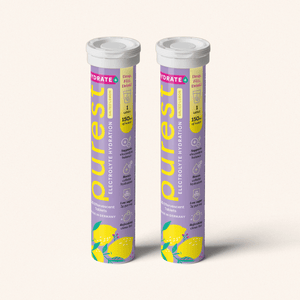
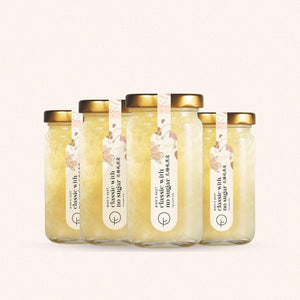
Address the reason you're reaching for it. If the 3pm crash is the trigger, protein at lunch usually helps more than another coffee — Clear Whey Protein Isolate + Collagen is an easy way to shore that up. If it's dehydration masquerading as fatigue, which is common in air-conditioned offices, Hydrate+ Electrolyte Hydration Tablets may be the actual fix. And for evening cravings and winding down without a stimulant, our Night Burn Saffron Elixir is built around saffron for the evening end of the day. As always: support around the habits, not a replacement for sleep.
Frequently asked questions
Is decaf actually caffeine-free? No — decaf typically retains a small amount, often a few milligrams per cup. Negligible for most people, but worth knowing if you're unusually sensitive.
I sleep fine after evening coffee. Am I an exception? Genetic variation in CYP1A2 activity is real, so some people genuinely clear caffeine faster. But falling asleep easily isn't the same as sleeping well. If you'd like to know, try two weeks with a firm early-afternoon cut-off and judge by how you feel on waking.
How much caffeine is safe in pregnancy? Recommendations are considerably lower than the general 400mg figure — commonly around 200mg daily — and guidance varies. This is one to confirm with your own doctor or midwife rather than a blog.
This article is general education, not medical advice — please speak with your doctor about caffeine, medications and your own health.