















 Written by Shereen, Product Management Associate · Updated 21 October 2026
Can I eat bird's nest during pregnancy?
Yes. Bird's nest is a traditional food many mums in Singapore and across Asia enjoy in pregnancy and confinement, and well-processed, fully cooked bottled bird's nest from a trusted source can be part of a balanced pregnancy diet. Our guidance is 2 tablespoons a day, preferably from the second trimester. Check with your doctor or gynae first.
This article is for you if: you're pregnant or preparing for confinement, and want to know how bird's nest fits a healthy pregnancy diet, when to start, how much to have and how to choose a good one.
Bird's nest has been a tonic for mothers-to-be in Chinese families for generations,[1] and in Singapore most new mothers still follow confinement traditions after giving birth.[2] Here's what bird's nest gives you, how it sits alongside the nutrients your body needs in each trimester, and how to enjoy it well.
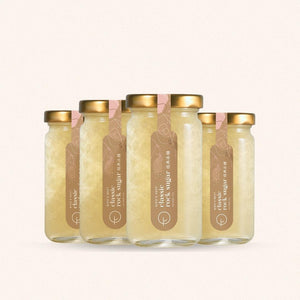
→ See Bird's Nest with Classic Rock Sugar, our simplest bird's nest recipe
In this article
- Why do mums eat bird's nest during pregnancy?
- What nutrients does bird's nest contain?
- What does your body need more of in pregnancy?
- When can you start eating bird's nest in pregnancy?
- How much bird's nest should you have when pregnant?
- What is the best time of day to have bird's nest?
- Can you have bird's nest if you're watching your sugar?
- How do you choose bird's nest when you're pregnant?
- Frequently asked questions
Why do mums eat bird's nest during pregnancy?
Bird's nest is a nourishing tradition for mothers-to-be: in Chinese families it is a normal practice to enjoy it as a health food during pregnancy.[1] It is the edible nest of swiftlets, made from their saliva, and it has been prized in traditional Chinese medicine since the Tang Dynasty (618 to 907 AD). Cooked the traditional way, double-boiled with rock sugar, it becomes the soft, silky bird's nest soup many families know.[1]
Many Singapore families keep traditional practices after birth, too. In a Singapore study of more than 1,200 mothers, most followed confinement practices in the first 3 weeks after delivery: 96.4% of Chinese, 92.4% of Malay and 85.6% of Indian mothers.[2]
What nutrients does bird's nest contain?
Bird's nest is mostly protein, with amino acids, sialic acid and minerals. Here's what a nest contains:
- Protein: about 50 to 55% of a dried nest's weight, mainly glycoproteins, which are proteins bound to sugar chains.[1]
- Amino acids: 18 of the 20 amino acids the body uses, including 9 essential amino acids, which your body needs to grow and repair tissue.[1]
- Sialic acid: bird's nest is one of the major food sources of sialic acid,[3] a type of sugar found on the surface of all the body's cells and in foods such as eggs, milk and red meat.[4]
- Minerals: calcium, phosphorus, iron, sodium, potassium and iodine.[1]
Bird's nest is enjoyed a couple of spoonfuls at a time, so think of it as a nourishing extra: your meals still provide most of the protein, iron and calcium you need. For the research on skin, immunity and more, read our guide to the benefits of bird's nest.
What does your body need more of in pregnancy?
In pregnancy your body needs more folate, iron and calcium, plus a little extra energy from the second trimester. HealthHub's recommended daily amounts for pregnant women in Singapore are 600 mcg of folic acid (up from 400 mcg), 27 mg of iron (up from 18 mg) and 1,000 mg of calcium (up from 800 mg).[5]
For protein, the Health Promotion Board (HPB) suggests 2½ servings of meat and alternatives a day, such as a palm-sized piece of fish or 2 small blocks of soft beancurd per serving, plus 500 ml of milk. It also advises focusing on the quality of what you eat rather than eating for two.[6] Here's how each stage looks, and where bird's nest fits:
| Stage | What your body needs | How bird's nest can fit | Practical tip |
|---|---|---|---|
| First trimester | Folic acid every day, usually taken from before pregnancy until about week 12 | Ideally, start bird's nest from the second trimester | Choose fully cooked food: skip raw or half-boiled eggs, sashimi and raw oysters |
| Second trimester | About 370 extra kcal a day; calcium and prenatal vitamins usually start from week 12 | A good time to begin, at 2 tablespoons a day as a light snack | For calcium, choose milk, yoghurt, calcium-fortified tofu and ikan bilis |
| Third trimester | About 480 extra kcal a day | Keep to 2 tablespoons a day alongside balanced meals | Drink 8 to 10 glasses of fluids a day |
| All through pregnancy | 27 mg of iron a day, and protein-rich foods every day | A nourishing extra, with most of your protein coming from meals | Iron comes from red meat, chicken, eggs and legumes; vitamin C from fruit helps you absorb it |
Nutrient needs: HealthHub.[5] [7] Food tips: Health Promotion Board.[6] Bird's nest guidance: The Purest Co product pages and Help Centre.
If you're still planning, our preconception nutrition primer covers the months before you conceive.
When can you start eating bird's nest in pregnancy?
Our guidance for The Purest Co bird's nest is to enjoy it in moderation, preferably from the second trimester. Every pregnancy is different, so check with your doctor or gynae before you start, especially if you have a health condition or take medication.
In the first trimester, the focus is on folic acid, which is usually taken from before pregnancy until about week 12.[7] If you'd like to enjoy bird's nest earlier, ask your doctor or gynae. From the second trimester, a small daily serving can stay part of your routine through to the third trimester and into confinement.
How much bird's nest should you have when pregnant?
Two tablespoons a day is the recommended daily serving on our bird's nest product pages, which keeps it in moderation. At that amount, one box of 4 bottles is a one-month supply.
Each 150 g bottle of The Purest Co bird's nest holds 9 g of bird's nest (dry weight), about 1.5 to 2 full nests, with no white fungus or seaweed added as fillers. A measured 2 tablespoons also keeps the sugar small, in line with HPB's advice to limit foods high in sugar in pregnancy.[6]
What is the best time of day to have bird's nest?
Any time that suits you. Our product pages give a daily amount, 2 tablespoons, rather than a set time, so pick a moment you'll remember. A snack between meals works well if you prefer smaller, more frequent meals, as some pregnant women do.[6]
- No cooking needed: bottled bird's nest is already double-boiled, so you can spoon it straight from the bottle.
- Your choice of temperature: enjoy it chilled, at room temperature or gently warmed. Chilled is a refreshing pick-me-up on a hot Singapore afternoon.
- Simple storage: shake well before serving, and keep opened bottles in the fridge.
Can you have bird's nest if you're watching your sugar?
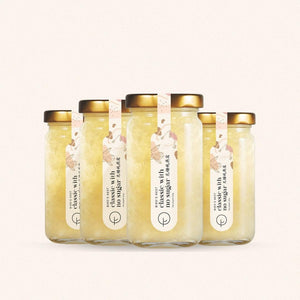
Yes, and the simplest choice is a recipe with no added sugar. If you've been told to watch your sugar, for example with gestational diabetes, Bird's Nest with No Sugar gives you 9 g of hand-cleaned bird's nest per bottle, double-boiled with no rock sugar or sweetener, and its nutrition panel lists 0 g of sugars. Check with your doctor or dietitian, and choose the option that suits their advice.
For gestational diabetes, HealthHub suggests spreading 3 small meals and 3 healthy snacks through the day, choosing unsweetened drinks, and working with your dietitian or diabetes nurse educator on your meals.[8] The NHS adds that you don't need a completely sugar-free diet, and suggests checking nutrition labels.[9] If you prefer a sweeter taste, Bird's Nest with Classic Rock Sugar is lightly sweetened with rock sugar, with 8.2 g of sugars per 100 g on its label.
How do you choose bird's nest when you're pregnant?
Choose bird's nest that is fully cooked, simply made and tested, from a source that shows you what's inside. In pregnancy, HPB and the NHS advise choosing foods that are thoroughly cooked rather than raw or undercooked.[6] [10]
- Fully cooked: bottled bird's nest that is double-boiled and ready to eat, or dried nest you double-boil thoroughly at home.
- A simple recipe: our product pages note that simpler recipes, such as classic or no sugar, are usually preferred in pregnancy.
- The amount of nest on the label: look for the grams of bird's nest per bottle, not just the words "bird's nest drink".
- Published lab tests: because bird's nest is popular with pregnant women, researchers recommend enforcing heavy metal limits for bird's nest products.[1] Look for a brand that shares its heavy metal and microbe test results.
- Genuine nest: hand-cleaned nest without bleach, and no white fungus or seaweed added to bulk it up.
For more buying tips, read things you need to know before buying bird's nest.
Bird's Nest with Classic Rock Sugar is our simplest recipe: water, rock sugar, a stabiliser and 9 g (dry weight) of hand-cleaned bird's nest in every 150 g bottle, double-boiled and ready to eat. Our bird's nest is ethically harvested from abandoned nests and prepared in an FDA-registered facility in Singapore, and independent heavy metal and microbe lab reports are published on the product page. Our founder started the brand wanting to put as much high-quality bird's nest into each bottle as possible for his pregnant wife, and to this day every bottle holds about 1.5 to 2 full nests.
Shop Bird's Nest with Classic Rock Sugar
Risk-free money-back guarantee
Related reading: Bird's nest benefits: what the science says · Things you need to know before buying bird's nest · Collagen and pregnancy: what to look for
Frequently asked questions
Can I eat bird's nest during confinement and while breastfeeding?
Yes, in moderation. Our guidance for The Purest Co bird's nest covers breastfeeding as well as pregnancy. Ready-to-drink bottles need no cooking, so they are easy to fit into a confinement menu. If you're taking medication after birth or have any concerns, check with your doctor first.
Is bird's nest with ginseng, herbs or collagen OK during pregnancy?
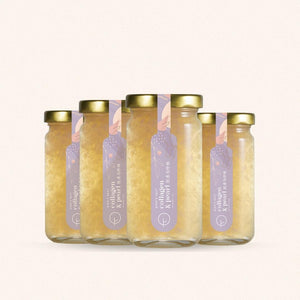
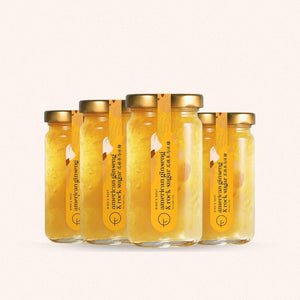
Check with your doctor first. Our product pages recommend asking your healthcare provider before having recipes with added ingredients during pregnancy, such as the American Ginseng recipe in Bird's Nest with Four Signature Flavors, or the collagen and pearl powder in Bird's Nest with Collagen & Pearl. For more on collagen, read our guide to collagen and pregnancy.
Can I cook bird's nest soup at home when pregnant?
Yes, as long as it is thoroughly cooked. Buy dried nest from a trusted seller, soak and clean it well, then double-boil it the traditional way, keeping the sugar light. If you'd rather skip the soaking and cleaning, bottled bird's nest comes already double-boiled and ready to eat.
Can I have bird's nest with my antenatal supplements?
Yes. Our product pages note that bird's nest can be taken with other supplements as part of your daily routine. It's a food, so enjoy it alongside the folic acid, calcium, iron or other antenatal supplements your doctor prescribes, and let your doctor know everything you take.
Key takeaways
- Bird's nest is a traditional food many mums in Singapore and across Asia enjoy in pregnancy and confinement.
- It contains protein (mainly glycoproteins), amino acids, sialic acid and minerals, and works best as a nourishing extra to balanced meals.
- Our guidance is 2 tablespoons a day, in moderation, preferably from the second trimester.
- Choose well-processed, fully cooked bird's nest from a trusted source that shows the amount of nest and its lab tests.
- Check with your doctor or gynae first, especially for recipes with added herbs, ginseng or collagen, or if you're watching your sugar.

About the author: Shereen is a Product Management Associate at The Purest Co. A Master's graduate in Pharmacy from Monash University, she brings four years of research experience to product development, with a focus on evidence-based, thoughtfully formulated supplements that support everyday wellbeing.
References
[1] Lee TH et al. Edible bird's nest: the functional values of the prized animal-based bioproduct from Southeast Asia. A review. Front Pharmacol. 2021.
[2] Fok D et al. A comparison of practices during the confinement period among Chinese, Malay, and Indian mothers in Singapore. Birth. 2016.
[3] Ling AJW et al. Review of sialic acid's biochemistry, sources, extraction and functions with special reference to edible bird's nest. Food Chem. 2022.
[4] Zhang T et al. Dietary sialic acids: distribution, structure, and functions. Crit Rev Food Sci Nutr. 2024.
[5] HealthHub. Recommended Dietary Allowances. Reviewed 15 November 2022.
[6] Health Promotion Board. Eat well, mum. HealthHub.
[7] HealthHub. Antenatal supplements. Reviewed 22 June 2026.
[8] HealthHub Parent Hub. Gestational diabetes.
[9] NHS. Gestational diabetes: treatment. Reviewed 8 December 2022.
[10] NHS. Foods to avoid in pregnancy. Reviewed 15 June 2026.
These statements have not been evaluated by any regulatory authority. This product is not intended to diagnose, treat, cure, or prevent any disease. Individual results may vary. Consult a healthcare provider before use if you are pregnant, breastfeeding, or on prescribed medication.

