


![[Pre-Order] Night Burn Saffron Elixir](http://thepurest.co/cdn/shop/files/NBSE-WebsitePDP_Tier1_1_1_300x.png?v=1786005812)












![[Pre-Order] Night Burn Saffron Elixir](http://thepurest.co/cdn/shop/files/NBSE-WebsitePDP_Tier1_1_1_1080x.png?v=1786005812)




In Singapore, health supplements are not pre-approved or licensed by HSA before sale. Responsibility for safety and labelling sits with the dealer. That makes reading the label yourself genuinely important, and there are five specific things worth checking.
Does HSA approve supplements?
No, and this is the single most useful thing to understand about the category here. HSA states that health supplements are not subject to approval and licensing for importation, manufacture and sale. Notifying HSA of a product is voluntary. Responsibility for safety, quality and labelling rests with the dealer: the importer, manufacturer, wholesaler or seller.
The practical consequence: if a product claims to be "HSA-approved" or "HSA-registered", that is a red flag rather than a reassurance, because there is no such approval to hold. We would rather you knew that, even though it means holding us to the same standard as everyone else.
What must legally appear on the label?
HSA does specify required label information. Look for the product name and dosage form, the name and quantity of each active ingredient, the intended purpose, dosage and directions, batch number, expiry date, country of manufacture, the name and address of the local importer or product owner, contraindications and warnings, storage conditions, and pack size.
A missing batch number, absent expiry date or no local importer address are legitimate reasons to put a product back on the shelf. These are basic traceability requirements, and their absence tells you something about how the product is being handled.
What does a "proprietary blend" actually hide?
It hides the one thing that matters most: how much of each ingredient you are getting.
When a label lists eight botanicals under a single "Proprietary Complex 1,200 mg", you cannot tell whether the headline ingredient is present at the amount used in research or at a trace quantity added so it can appear on the front of the pack. This practice is sometimes called fairy dusting, and blends are the main way it survives.
You do not need to distrust every blend. You do need to notice when the numbers you would use to judge a product have been removed.
Elemental versus compound weight: the most common trap
This one catches nearly everybody, and it is worth two minutes of your attention.
"Magnesium oxide 400 mg" is the weight of the whole compound, not the magnesium in it. Magnesium oxide is roughly 60% magnesium by mass, so the actual elemental magnesium is considerably less than the number on the front. The same applies to calcium carbonate versus calcium citrate, and to iron salts, where ferrous sulfate, fumarate and gluconate deliver quite different amounts of elemental iron per milligram.
What to look for: the words "elemental" or a phrase like "(providing 200 mg elemental magnesium)". A label that gives you both numbers is being straightforward with you.
Which marketing terms mean nothing?
HSA gives guidance here that is useful to borrow as a consumer. Dealers are advised to avoid jargon such as "nanoclusters" and "pharmaceutical grade", which sound technical but have no agreed definition. "Clinically proven" is discouraged because it implies a standard of evidence expected of medicines. "100% safe" and safety-because-it-is-natural claims are not acceptable, and neither are unqualified superlatives.
Also worth knowing: healthcare professional endorsements and testimonials are not permitted on supplement labels or advertising in Singapore. If you see a doctor's face recommending a supplement, something is off.
And a note on what supplements may legally claim at all. In Singapore they must not be advertised as treating, preventing or curing any disease. Permitted claims describe support or maintenance of normal body function in healthy people. Anything promising to cure a condition is not a bold brand; it is a non-compliant one.
Do certification marks mean the product works?
No, and this distinction is worth holding onto. Marks such as GMP, NSF, Informed Sport or USP verify manufacturing standards, contaminant testing, and that the contents match the label. That is genuinely valuable, particularly for confirming there is nothing in there that should not be.
But they verify quality and content, not efficacy. A third-party tested product still has to have good evidence behind its ingredients and doses. Both things matter, and they are not the same thing.
A quick checklist
Before you buy: Can you see the quantity of every active ingredient? Is mineral content given as elemental? Is there a batch number, expiry date and local importer address? Are the doses within HSA's maximum daily limits, or does the label explain why not? Does the marketing avoid "cures", "clinically proven" and "HSA-approved"?
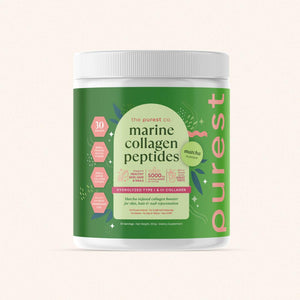
You are welcome to run that checklist over our own range, including Marine Collagen Peptides and Daily Supergreens Blend. We would rather sell to people who know what they are looking at.
Frequently asked questions
Are supplements sold in Singapore tested before sale?
Not pre-market by HSA. HSA sets limits and requirements and takes action against non-compliant products, but responsibility for testing sits with the dealer.
Is a longer ingredient list better?
Usually not. More ingredients across a fixed capsule size means less of each. Fewer ingredients at meaningful doses is often the better product.
What if a product exceeds HSA's maximum daily limits?
It should carry labelling indicating use under healthcare professional recommendation. Treat unexplained high doses with caution.
This article is general education, not medical advice. Please speak to a qualified healthcare professional about your own health.

