


![[Pre-Order] Night Burn Saffron Elixir](http://thepurest.co/cdn/shop/files/NBSE-WebsitePDP_Tier1_1_1_300x.png?v=1786005812)












![[Pre-Order] Night Burn Saffron Elixir](http://thepurest.co/cdn/shop/files/NBSE-WebsitePDP_Tier1_1_1_1080x.png?v=1786005812)




Working against your body clock is associated with more irregular menstrual cycles, increased appetite and hunger, and disrupted sleep. The most effective responses are behavioural rather than supplemental: consistent sleep timing, deliberate light exposure and management, and shifting your main eating window toward your biological day.
Who does this affect?
More people than the phrase "shift work" suggests. Nurses and healthcare staff, cabin crew, hospitality and F&B teams, security personnel, and anyone regularly working with counterparts in distant time zones. In a city that runs late and connects globally, plenty of people are living slightly out of sync without ever calling it shift work.
Does shift work affect your period?
This is one of the better-evidenced effects, so it is worth stating clearly. A meta-analysis found that women on rotating shifts had higher odds of menstrual irregularity compared with those on fixed day shifts, with a pooled odds ratio of 1.35. The association was stronger in women under 30, at 1.66.
In one study of Japanese nurses, irregular cycles were reported by 24.8% of those working no nights, rising to around 37% of those on rotating shifts.
Two honest caveats. Findings for period pain specifically were not statistically significant, so we should not claim that one. And these are observational studies, so confounding by stress, workload and body weight is likely. The association is real; the causal chain is less certain.
Why am I so much hungrier on nights?
You are probably not imagining it, though the mechanism is less settled than commonly presented.
The widely cited early research in sleep-restricted adults found leptin, the satiety hormone, dropped by around 18%, while ghrelin, the hunger hormone, rose by around 28%, with self-reported hunger up roughly 24% and a particular pull toward calorie-dense food.
But the follow-up literature is mixed. A large systematic review found ghrelin higher in short sleepers, while a more recent meta-analysis concluded that short-term sleep deprivation does not consistently affect leptin and ghrelin. The fair summary: short sleep is reliably associated with increased hunger and appetite; the hormonal explanation is plausible but the data are inconsistent.
Either way, planning your food rather than leaving it to a 3am vending machine is a reasonable response.
What about the cancer classification?
You may have seen headlines about this, so here it is stated carefully. The International Agency for Research on Cancer classifies night shift work involving circadian disruption as Group 2A, "probably carcinogenic to humans", a position reaffirmed in 2019. The strongest human evidence concerns breast cancer.
Important context: Group 2A is a hazard classification, not a personal risk estimate. It describes the strength of evidence that something can cause cancer under some conditions, not how likely it is to affect you. If your job requires night work, this is information for your long-term health conversations with your doctor, not a reason for alarm, and certainly not something any supplement addresses.
What actually helps?
The strategies with reasonable support are behavioural, and several are free.
Anchor your sleep timing. Keeping some consistency even on rest days is more useful than flipping fully back to a day schedule and then flipping again.
Use light deliberately. Bright light during your working night helps signal alertness. Then, critically, avoid bright light on the way home. Sunglasses on the commute home after a night shift is one of the highest-value, lowest-effort things you can do, because morning sunlight is a powerful signal telling your body to wake up just as you are trying to wind down.
Protect the sleep environment. Dark, cool and quiet. Blackout curtains earn their keep, particularly in a flat that gets full afternoon sun.
Shift your eating window. Try to keep your main meals in your biological day and avoid heavy meals in the middle of the circadian night, when digestion and glucose handling are less efficient.
Watch caffeine in the back half of a shift. It works, which is exactly the problem when you need to sleep three hours later.
Request forward-rotating rosters where possible. Morning to evening to night is generally easier to adapt to than the reverse, if your workplace has any flexibility.
Where do supplements fit?
Modestly, and we would rather say so. There is no good evidence that any supplement offsets the health effects of shift work, and we are not going to suggest otherwise.
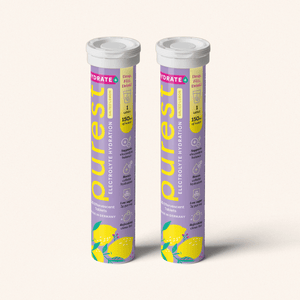
What is reasonable is covering the basics that shift work makes harder. Hydration slips easily on a busy ward or a long-haul rotation, and Hydrate+ Electrolyte Hydration Tablets make it easier to keep up. Eating properly at odd hours is genuinely difficult, and having something quick and protein-containing on hand, such as Clear Whey Protein Isolate + Collagen, tends to work better than whatever is available at 4am. General nutritional support like Daily Supergreens Blend helps when meals are irregular.
These support ordinary nutrition when your schedule makes it hard. They do not fix circadian disruption. Sleep and light do the heavy lifting here.
Frequently asked questions
Can I fully adapt to night shifts?
Complete adaptation is uncommon, particularly on rotating rosters, because rest days pull you back toward a day schedule. Most people manage partial adaptation.
Should I nap before a night shift?
A planned nap before a shift is widely used and generally helpful. Keep it early enough that it does not eat into your post-shift sleep.
My periods became irregular after starting shifts. Should I see a doctor?
Yes. Shift work is associated with irregularity, but that association should not be assumed to be the explanation in your case. Persistent changes deserve proper assessment.
This article is general education, not medical advice. Please speak to a qualified healthcare professional about your own health and sleep.