






![[Pre-Order] Joint Pre+Probiotic Melts](http://thepurest.co/cdn/shop/files/1_af310510-f2f3-4ee7-91c6-0c9314c437ab_300x.jpg?v=1755068216)













The short answer: Most brittle nails are caused by what your hands go through daily — water, detergent, gel removal — rather than a hidden deficiency. Fixing the daily exposure matters most; supplements with reasonable evidence may add a modest improvement over three to six months.
Why do nails become brittle in the first place?
A nail plate is layered, a bit like plywood. Its strength depends on those layers staying bonded and holding the right amount of moisture. Brittleness — splitting at the tips, peeling into sheets, ridges that catch on fabric — usually means those layers have been repeatedly swollen and dried out.
The most common culprits are unglamorous and entirely fixable: frequent hand washing and dishwashing, cleaning products, acetone removers, and the filing and soaking involved in gel or acrylic removal. Each cycle of wet-then-dry weakens the bond between layers.
Less commonly, brittleness reflects something internal — low iron, low zinc, thyroid problems, or simply age, since nail plates thin over time. Certain medications matter too. That's the minority of cases, but it's why persistent brittleness alongside other symptoms is worth mentioning to your doctor.
Does biotin actually work for nails?
Partly, with caveats. There are small clinical trials from some decades back reporting improvements in nail firmness, hardness and thickness with oral biotin in people with brittle nails. Those studies are genuinely encouraging but also small, mostly uncontrolled, and old.
Major clinical sources are more measured, noting there isn't strong evidence that extra biotin delivers the sweeping hair, skin and nail benefits printed on many labels — particularly in people who aren't deficient to begin with, which is most of us. Frank biotin deficiency is rare.
One practical warning worth knowing: high-dose biotin can interfere with certain laboratory blood tests, including some thyroid and cardiac markers, producing misleading results. If you take it, mention it before any blood test.
What about collagen peptides for nails?
The evidence here is limited but more directly on-target. A frequently cited open-label study followed 25 participants taking 2.5g of bioactive collagen peptides daily for 24 weeks and reported roughly a 12% increase in nail growth rate and a 42% reduction in broken nails, with most participants rating their brittle-nail symptoms improved.
Read that honestly: 25 people, no placebo group, and self-reported outcomes alongside the measured ones. It's a promising signal rather than proof. The mechanism is at least plausible — nails are keratin, and the amino acids and peptides from collagen appear to be used broadly across skin, hair and nail tissue.
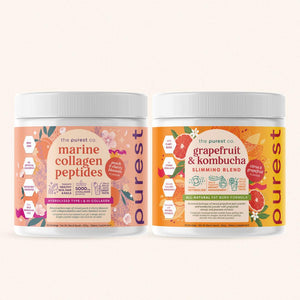
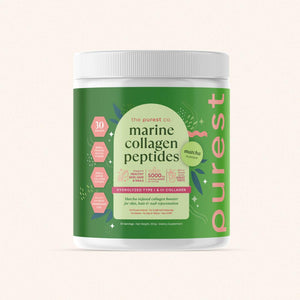
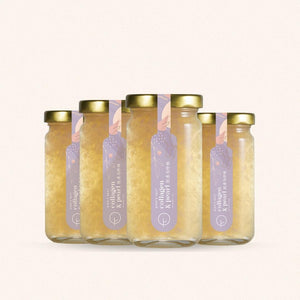
If you'd like to try it, our Marine Collagen Peptides is a straightforward daily option, and Collagen Glow Berries is the same idea in a form people tend to stick with. Consistency matters far more than the format you pick.
What makes the biggest difference day to day?
Reduce the wet–dry cycling. Gloves for dishes and cleaning is genuinely the highest-impact change most people can make, and it costs nothing.
Moisturise the nail and the skin around it. A plain emollient or nail oil after washing helps the plate hold moisture. Doing it at night is easiest to remember.
Give gels a break. It's rarely the polish itself — it's the filing before and the soaking-off after. Even a few weeks off between sets lets the plate recover.
Keep them shorter while they recover. Less length means less leverage, and less leverage means fewer catastrophic splits.
Eat enough protein. Nails are built from it, and low overall intake shows up in tissue that's cheap for your body to deprioritise. If breakfast is the weak point, Clear Whey Protein Isolate + Collagen is one easy way to close the gap.
Frequently asked questions
How long before I see a difference? A fingernail takes roughly four to six months to grow out completely, so the nail you can see today was made months ago. Nothing — supplement or habit — changes the existing plate. Judge results at three to six months, not three weeks.
Are white spots a calcium deficiency? Almost never. Small white marks are usually minor trauma to the nail matrix, often from a knock you don't remember or from manicure pressure. They grow out on their own.
Should I take biotin and collagen together? There's no known problem with doing so, but there's also no evidence the combination beats either alone. If you're choosing one, collagen peptides have the more relevant trial data for breakage specifically — and remember the biotin–blood test interference if you go that route.
This article is general education, not medical advice — please speak with your doctor or a dermatologist about persistent nail changes.