



















![Daily Supergreens Blend [Pre-order]](http://thepurest.co/cdn/shop/files/DSB_300x.png?v=1777531147)







![Daily Vitality Duo [Pre-order]](http://thepurest.co/cdn/shop/files/DLB_DSB_300x.png?v=1777263631)










Last reviewed: March 2026 · The Purest Co Editorial Team · About The Purest Co
What is the difference between ceramides and collagen for dry skin?
Ceramides are the lipid molecules that form the waterproof barrier between skin cells in the outer layer, preventing water loss. Collagen is the structural protein in the deeper dermis that provides firmness and internal moisture capacity. They address dryness at different skin layers: ceramides at the barrier, collagen at the structural level. Most people with persistent dry skin need both.
This article is for you if: you have dry, rough, or sensitised skin and want to understand which supplement or ingredient addresses which part of the problem
Less relevant if: you are happy with your current skin hydration routine and not looking to change it
Ceramides and collagen are both associated with hydrated, healthy skin. Both are widely used in supplements and skincare. And both are frequently recommended for dry skin. But they are as different mechanistically as the walls of a building and the waterproof render on its exterior. Understanding which one does what changes how you approach persistent dryness.
The skin is structured in layers. The outermost layer, the stratum corneum, consists of dead skin cells (corneocytes) surrounded by a lipid matrix. Ceramides make up approximately 50% of that lipid matrix. They are the mortar between the bricks. Their job is to prevent water from escaping through the outer skin surface, what dermatologists call transepidermal water loss (TEWL). When ceramide content is low, the barrier is compromised and water leaks out regardless of how much moisturiser you apply on top.
Collagen is in a completely different layer, the dermis, which lies beneath the epidermis. It provides the structural scaffolding that gives skin its firmness, elasticity, and capacity to hold water at depth. When collagen degrades, skin becomes thinner and less resilient, and its intrinsic moisture capacity decreases. This is a different kind of dryness from barrier-related TEWL, and it requires a different solution.
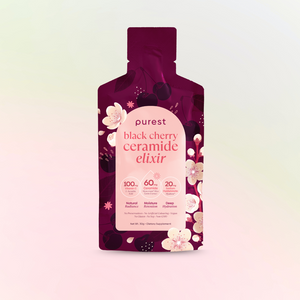
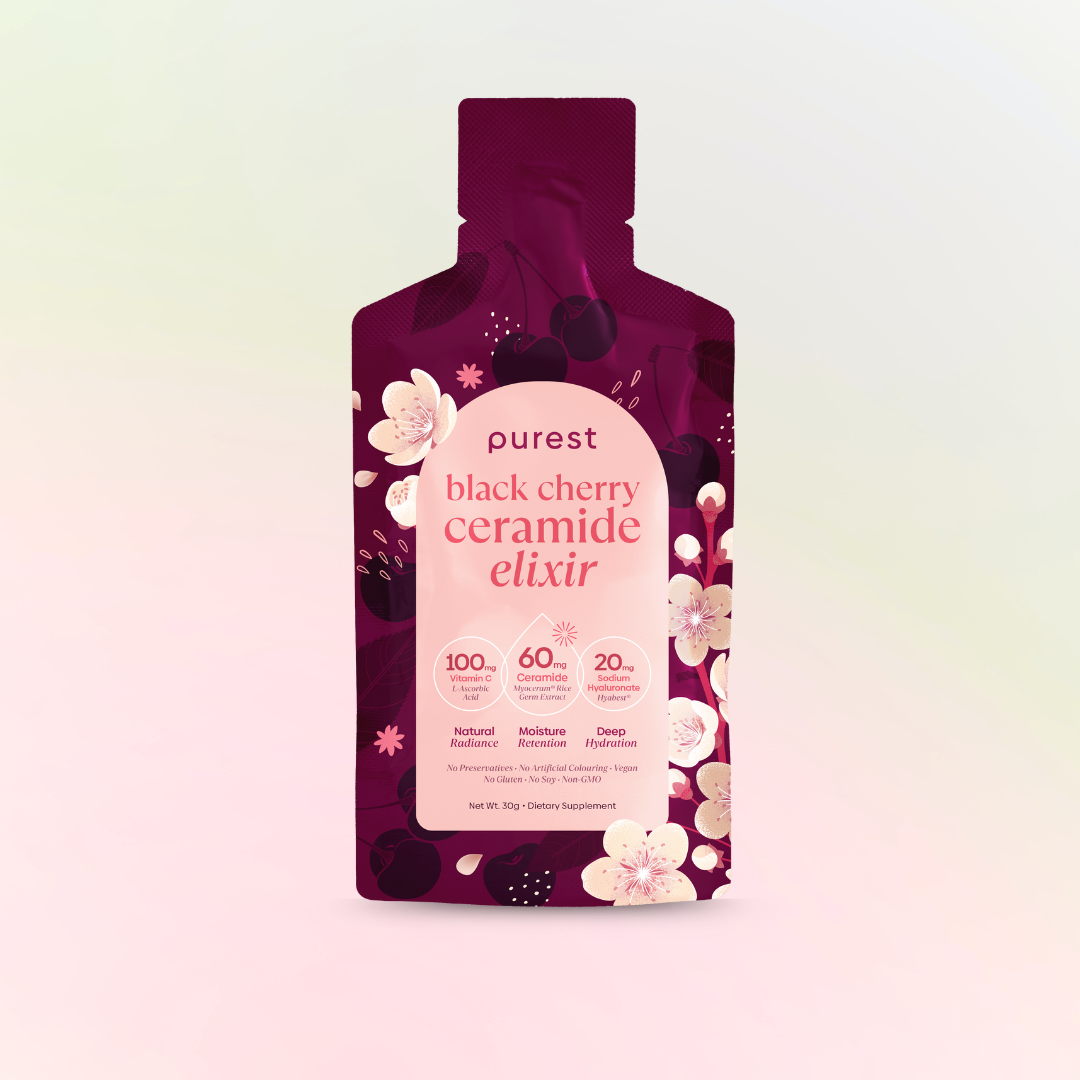
→ Support skin barrier function from within with Black Cherry Ceramide Elixir
In this article
What Ceramides Do
Ceramides are sphingolipids, a specific class of fat molecules that make up the intercellular lipid matrix of the stratum corneum. This matrix is organised in lamellar layers, alternating sheets of lipids that create a near-waterproof seal. Ceramides are the primary structural component of this seal, accounting for approximately half of all stratum corneum lipids.
When ceramide content is reduced, as it is in eczema, psoriasis, over-exfoliated skin, or naturally dry skin types, the lamellar layers lose their integrity. Water evaporates through the gaps. Environmental irritants and allergens enter through the same gaps. The result is the tightness, roughness, flakiness, and reactivity that characterise barrier-compromised skin.
Ceramide supplementation, whether topical or oral, directly replenishes this lipid matrix. Topical ceramides deposit directly onto the barrier surface and are incorporated into the lamellar layers. Oral ceramides are absorbed and distributed through the bloodstream to keratinocytes (skin cells), which incorporate them into the barrier as cells migrate to the surface during normal skin renewal.
What Collagen Does
Collagen is a structural protein that forms the fibrous network of the dermis. Type I and III collagen are the primary skin collagens, providing tensile strength, elasticity (in combination with elastin), and the physical structure that gives skin its volume and firmness. Fibroblasts produce collagen continuously throughout life, but net production begins declining from the mid-20s and accelerates with UV exposure, smoking, high sugar intake, and hormonal changes.
Collagen is also highly hydrophilic, meaning it attracts and holds water within the dermis. A dermal matrix rich in intact collagen fibres holds significantly more moisture than one with degraded or sparse collagen. This is the mechanism by which collagen loss contributes to dry skin at depth: the moisture reservoir of the dermis diminishes as collagen degradation outpaces production.
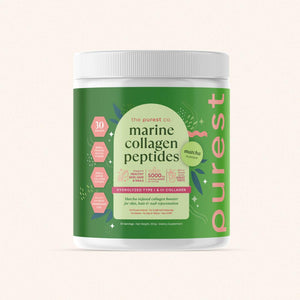
Oral marine collagen peptides, absorbed as di- and tri-peptides, stimulate fibroblasts to increase collagen synthesis and also directly accumulate in the dermis, supporting the moisture-holding matrix.
Two Types of Dry Skin
Not all dry skin has the same underlying cause. Barrier-compromised dry skin is characterised by TEWL, tightness, sensitivity, and roughness. It reacts to products, is worse after washing, and improves quickly with a good occlusive moisturiser. The root cause is a ceramide-depleted or otherwise compromised outer barrier. Ceramide supplementation addresses this type.
Structurally dry skin is characterised by lack of volume, fine lines even without expression, skin that feels thin and crepey rather than rough, and dryness that moisturiser addresses only temporarily on the surface. The root cause is collagen and dermal matrix depletion, usually age-related, UV-related, or hormonally driven. Collagen supplementation addresses this type.
Many people with persistent dry skin have elements of both, particularly those in mid-life or those with both a naturally dry skin type and sun exposure history. For them, addressing only one layer leaves the other as an ongoing source of dryness.
Do Oral Ceramides Work?
The evidence for oral ceramide supplementation has been building since the early 2000s. Phytoceramides, ceramide analogues from wheat or rice extract, are the most studied form. A 2014 randomised controlled trial published in Archives of Dermatological Research found that oral phytoceramide supplementation at 200mg daily for 90 days significantly improved skin surface evaluation scores and self-reported moisture levels compared to placebo.
The mechanism is via the systemic route: absorbed phytoceramides are incorporated into ceramide biosynthesis pathways in keratinocytes, contributing to the lipid pool available for barrier layer formation as cells differentiate. This provides a complementary supply pathway to topical application and may be particularly useful in conditions like eczema where the barrier is compromised across large surface areas.
Side by Side: Ceramides vs Collagen
| Factor | Ceramides | Collagen |
|---|---|---|
| Skin layer targeted | Outer epidermis (stratum corneum) | Dermis |
| Primary function | Moisture barrier / TEWL prevention | Structural support, intrinsic moisture |
| Best for | Barrier-compromised, eczema, reactive skin | Ageing, thin, structurally dry skin |
| Form | Topical (direct) + oral phytoceramides | Oral hydrolysed peptides (most effective) |
| Time to effect | Days (topical), 4 to 6 weeks (oral) | 8 to 12 weeks (structural changes) |
| Works best with | Each other + hyaluronic acid | Vitamin C, ceramides |
Using Both Together
The most effective approach for persistent dry skin with both barrier and structural components is to address both layers simultaneously. Topical ceramide formulations restore the outer barrier, reducing TEWL and immediate tightness. Oral ceramide supplementation supports the ongoing supply of ceramides to the barrier renewal process. Marine collagen peptides address the deeper dermis, rebuilding the moisture-holding structural matrix.
This layered approach reflects how the skin actually works. A healthy, hydrated skin is one where the outer barrier retains water effectively at the surface and the dermis maintains a hydrated structural matrix below. Products that address only one layer deliver partial results. Products or supplement combinations that address both deliver the full response.
Common Mistakes
Treating ceramide depletion with more collagen and vice versa. These are different problems. If you have eczema or sensitised skin with a compromised barrier, marine collagen alone will not resolve the TEWL driving your dryness. Ceramides are the correct primary intervention.
Using topical collagen creams expecting structural results. Collagen molecules are too large to penetrate the dermis topically. Topical collagen provides surface moisturisation but does not rebuild the dermal collagen matrix. Oral marine collagen peptides are the effective delivery route for structural outcomes.
Stopping either when skin improves temporarily. Both ceramide and collagen outcomes require consistency. Barrier repair is ongoing because skin constantly renews. Collagen synthesis requires continuous substrate supply. Stopping when you feel better causes a gradual return to baseline.
Barrier and Structure Support
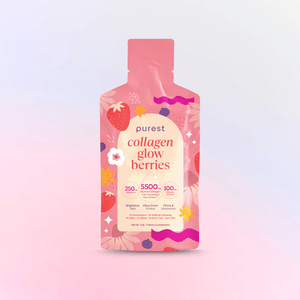
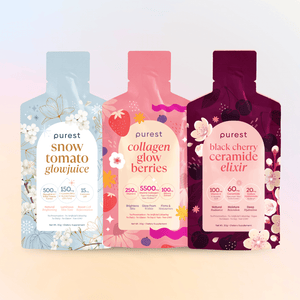
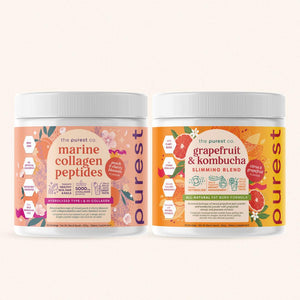
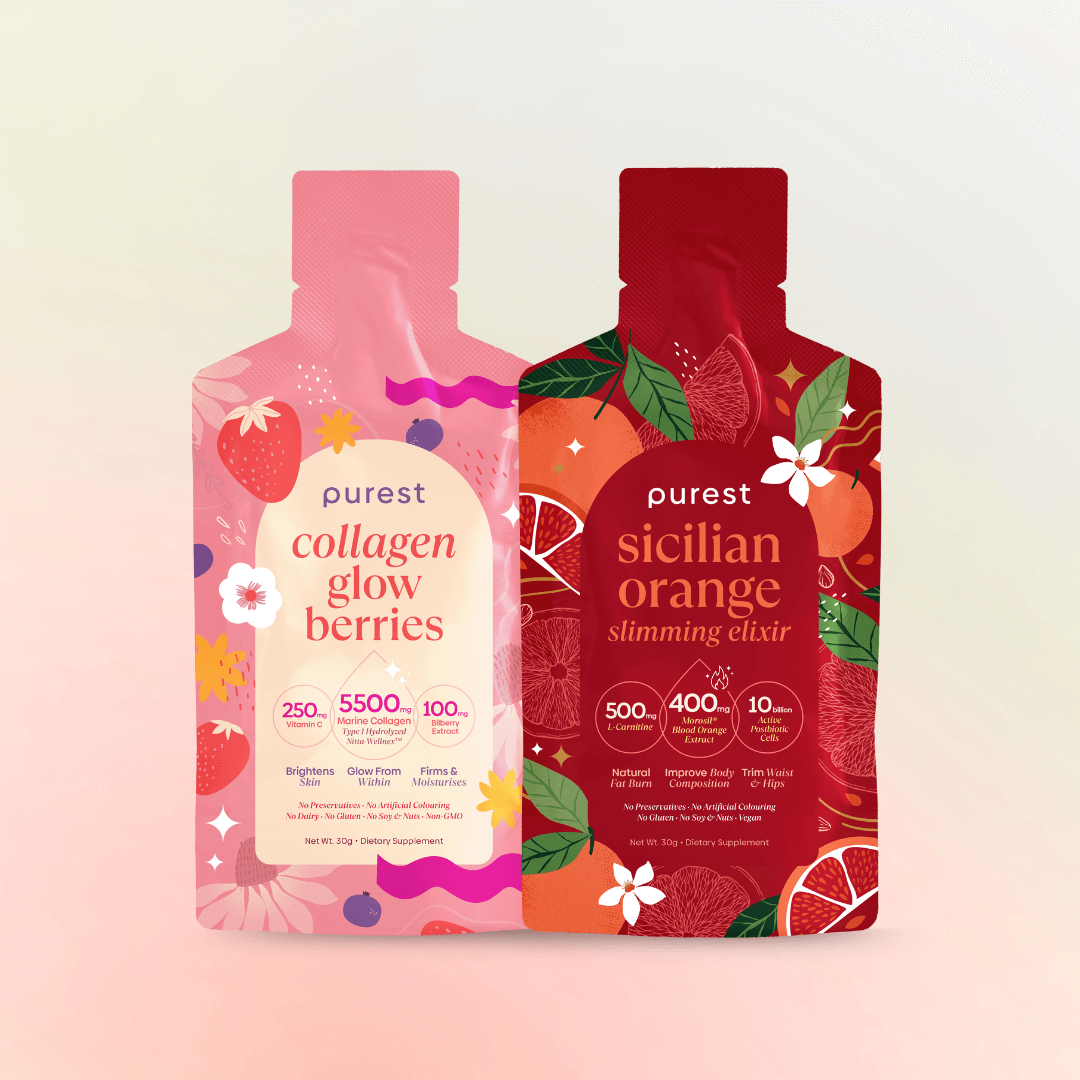
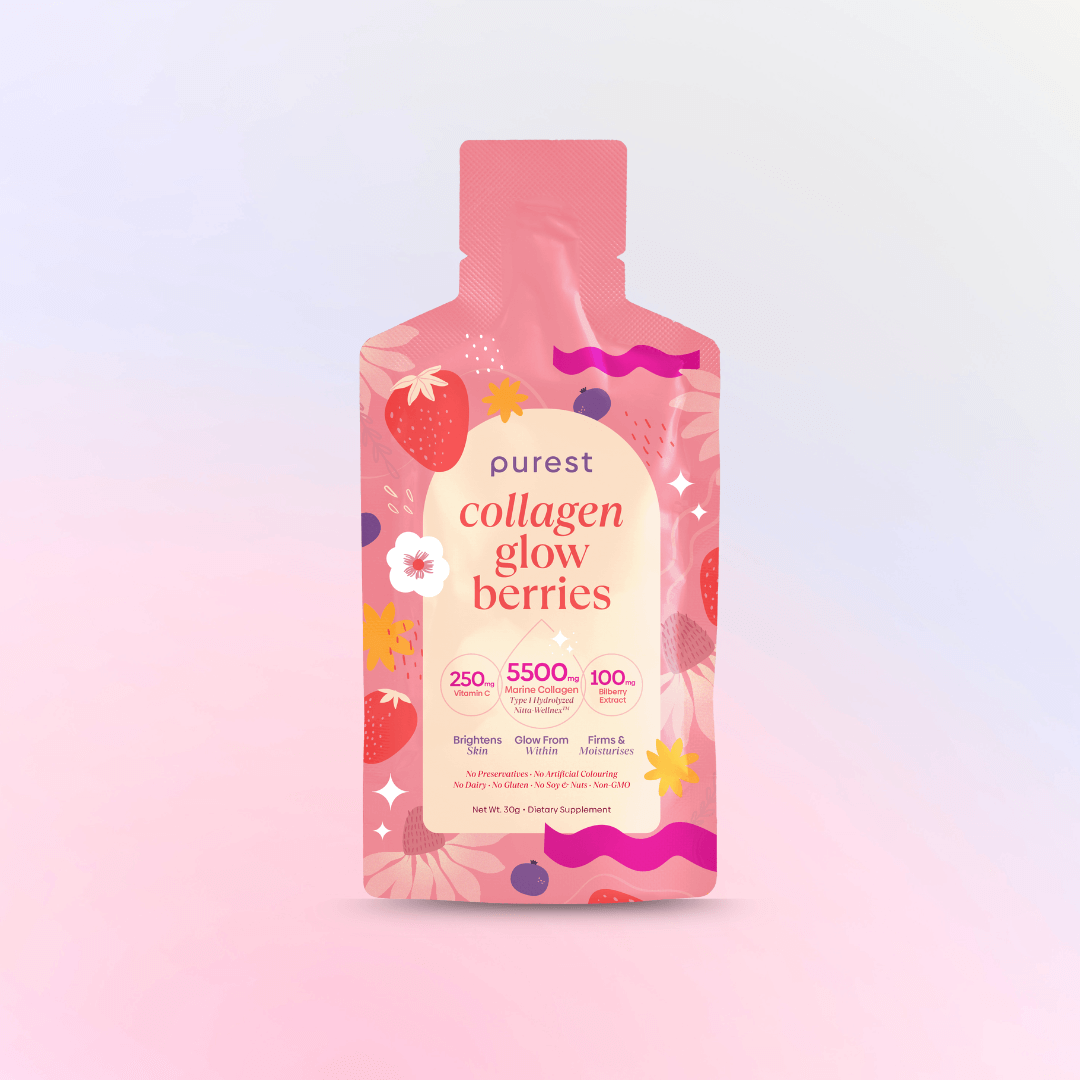
Black Cherry Ceramide Elixir from The Purest Co delivers ceramides alongside antioxidants from black cherry extract, addressing the barrier layer and the oxidative stress that compromises barrier integrity simultaneously. For the structural layer, Collagen Glow Berries provides hydrolysed marine collagen at the dose shown to improve dermal density and moisture capacity in clinical trials.
Used together, they address both the outer barrier (ceramides stopping TEWL) and the inner dermis (collagen rebuilding the structural moisture matrix) for a comprehensive approach to persistent dryness.
Shop Black Cherry Ceramide Elixir
90-Day Money Back Guarantee
Free shipping on orders above $60
Key Takeaways
- Ceramides seal the outer skin barrier to prevent water loss; collagen supports the deeper dermis to hold moisture structurally.
- Barrier-compromised dry skin (eczema, sensitivity) needs ceramides; structural dry skin (ageing, thinning) needs collagen.
- Oral ceramides work via systemic absorption into the barrier renewal process and complement topical ceramide use.
- Collagen must be taken orally as hydrolysed peptides; topical collagen molecules are too large to penetrate the dermis.
- Most people with persistent dry skin have both barrier and structural components and benefit from addressing both.
Frequently Asked Questions
What is the difference between ceramides and collagen for skin?
Ceramides are lipid molecules that form the waterproof barrier between skin cells in the outer epidermis, preventing moisture loss. Collagen is a structural protein in the deeper dermis that provides skin firmness and elasticity. They work on different skin layers with different mechanisms: ceramides address the barrier and moisture retention, collagen addresses structural density and firmness.
Which is better for dry skin: ceramides or collagen?
Depends on the cause of dryness. If skin feels tight and rough with a compromised barrier (sensitised by products, environment, or skin conditions), ceramides address the root problem directly. If skin is ageing, losing volume and elasticity with dryness as part of structural thinning, collagen addresses the deeper cause. For most people with persistent dry skin, both are needed for different layers.
Do oral ceramides work as well as topical ceramides?
Oral ceramides, particularly phytoceramides from wheat or rice extract, have been studied and show measurable improvements in skin moisture and barrier function. A 2014 study found that oral phytoceramide supplementation at 200mg daily for 3 months significantly improved skin hydration and barrier integrity. Oral ceramides complement topical application and may reach deeper skin layers more effectively.
Can I take ceramides and collagen together?
Yes, and they complement each other well. Ceramides address the outer barrier layer, reducing moisture loss from the epidermis. Collagen peptides address the inner dermis layer, improving structural density and the skin’s ability to retain moisture at depth. Together they address the moisture retention problem from both directions, which is why products combining both can outperform either alone.
How long do ceramides take to work?
Topical ceramides can improve transepidermal water loss (TEWL) measurably within 24 to 72 hours of application. Oral ceramides show skin hydration improvements in research at 4 to 6 weeks of consistent use. Both require consistency: barrier repair is a continuous process, and stopping ceramide supplementation or topical use allows TEWL to return to baseline within days to weeks.
Are ceramides good for eczema?
Yes. Eczema is characterised by significantly reduced ceramide content in the skin barrier, particularly ceramide 1 and ceramide 3. This barrier deficiency allows allergens to penetrate and moisture to escape, driving the itch-scratch cycle. Topical ceramide formulations are a first-line recommendation in eczema management. Oral ceramides may provide complementary support by rebuilding barrier lipids from the inside.
What foods contain ceramides naturally?
Ceramides are found in whole grains (particularly wheat germ and brown rice), eggs, dairy products, and soy. However, dietary ceramide content is low relative to therapeutic supplementation doses, and bioavailability from food sources is variable. For meaningful barrier support in conditions like eczema or severe dryness, supplementation provides more consistent delivery than diet alone.
References
[1] Coderch L et al. (2003). Ceramides and skin function. Am J Clin Dermatol.
[2] Gueniche A et al. (2014). Oral ceramide supplementation for skin hydration. Arch Dermatol Res.
[3] Proksch E et al. (2014). Oral supplementation of specific collagen peptides. Skin Pharmacol Physiol.
This article is for informational purposes only and is not a substitute for professional medical advice, diagnosis, or treatment. Always consult a qualified healthcare provider with any questions about a medical condition.

