
















![[KOL] Boosters - Skin & Hair](http://thepurest.co/cdn/shop/files/affiliate_page_6_300x.png?v=1791902411)




Short answer: they're not competitors — they work on completely different problems. Botox is a medical injectable that temporarily relaxes muscles to soften expression lines. Collagen (taken as peptides) supports your skin's structure, hydration and elasticity from within, gradually. One freezes movement; the other supports the foundation.
What Botox does
Botox is a prescription treatment injected by a licensed professional. It temporarily reduces muscle movement, softening dynamic wrinkles (like frown lines and crow's feet). Effects appear within days and last a few months. It does nothing for skin hydration, texture or the deeper collagen scaffold — and it's a clinical procedure, not a daily habit.
What collagen does
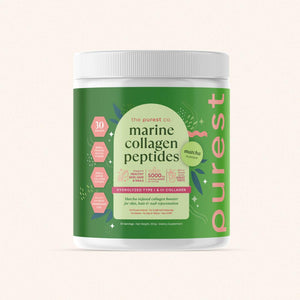
Collagen peptides supply building blocks and signalling fragments that, in studies, support skin hydration and elasticity over 8–12 weeks. It's gradual, full-face (and body), and works on the structural side rather than muscle movement. It won't erase a deep expression line the way an injectable can.
So which should you consider?
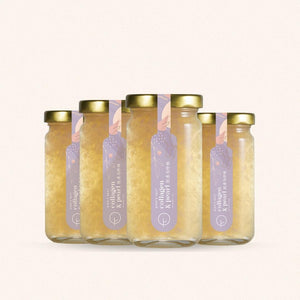
They address different goals and can even be complementary — collagen for everyday skin quality, injectables (if you choose them, via a qualified doctor) for specific dynamic lines. For the daily, foundational side, our Collagen Glow Berries deliver collagen with vitamin C. Whatever you do, daily SPF protects the results.
FAQ
Can collagen replace Botox? No — they do different things; collagen supports skin structure, Botox relaxes muscles.
Can I do both? Yes, many people use collagen daily and consider injectables separately via a doctor.
How fast does collagen work? Gradually — typically 8–12 weeks; Botox works within days but is temporary.
General education only, not medical advice. Cosmetic procedures should be discussed with a licensed medical professional.